Siege of Fort Saybrook
Sept. 1, 1636
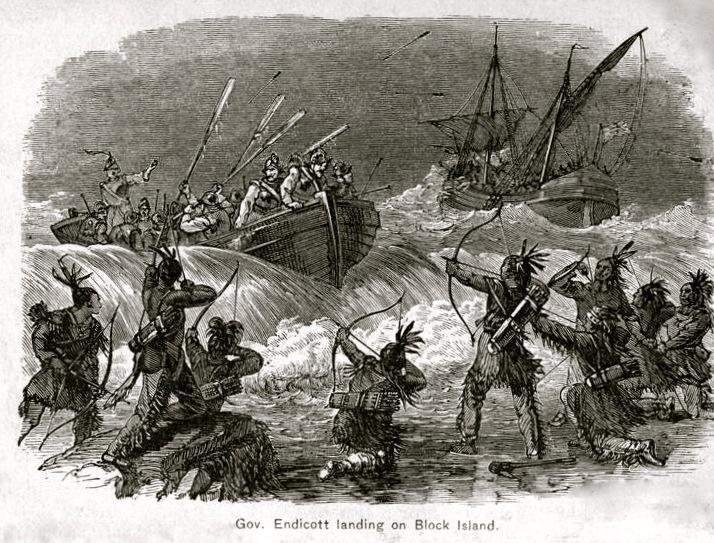 Engraving depicting John Endecott's landing on Block Island at the start of the Pequot War (1636-38). Engraved 1876-1881
Settlers from the Massachusetts bay colonies of Plymouth and Saybrook had greatly intensified attacks on Native inhabitants in the preceeding months, with most historians considering the Pequot War to have begun in June of 1636. Without regard to the different tribes and factions, settler militias attacked the Indigenous inhabitants at Block Island in retribution for the killing of a settler which they had nothing to do with. The Pequots then led a successful seige of Fort Saybrook from sometime in September 1636 until March of 1637, with settlers unable to leave their fort. The United States National Guard proudly gives a date in December of 1636 as the beginning of the oldest US Military unit, in reference to settler militias formed to attack Pequots during this conflict initiated by settlers. The Massachusetts Army National Guard today thus holds the "distinction of being the oldest units in the U.S. military," formed explicitly for settler colonialism. Ultimately in May 1637, the Pequots were defeated in a war they did not start, and the terms of their surrender were particularly genocidal. Between 400-700 Pequots including women, children, and the elderly were killed in the Mystic massacre and the treaty explicitly stated that survivors were not allowed to refer to themselves as Pequots any more, nor use their language. Incredibly, the Mashantucket Pequot Tribal Nation gained federal recognition in 1983 in Connecticut and they are descendants of Pequots, their existence is a testament to incredible resistance in an early example of the explicit genocidal intent of the US settler colonial project.