Siege of Detroit (Tecumseh)
Aug. 15, 1812
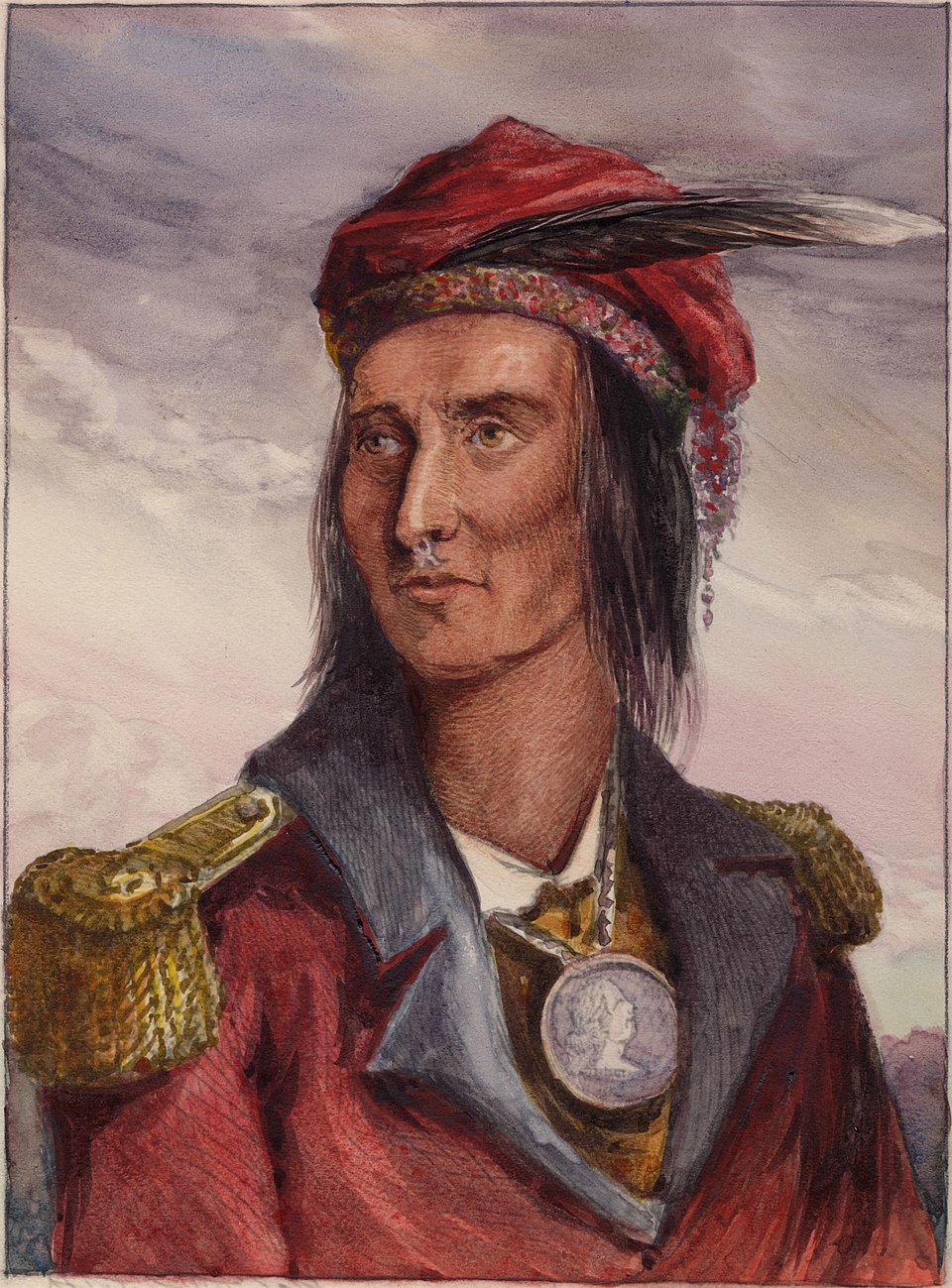 A painting of Shawnee chief Tecumseh, in water colors on platinum print, based on Lossing's 1868 engraving
Shortly after Tecumseh's win at the Battle of Brownstown, his forces combined with the British took Fort Detroit, using deception to convince Hull to surrender the Fort. Using intelligence from mail they intercepted at Brownstown, Tecumseh knew Hull was weakened and afraid in Fort Detroit. British Major General Isaac Brock raised a militia against Hull and their combined forces were ~1300 to the American forces of ~2200. While initially refusing to surrender, after Tecumseh's forces moved through the woods to the north of the fort, Hull became convinced the forces were much larger than they were. The British and Native forces planned to bombard from outside and wait out the American forces which they knew were already under supplied. Hull surrendered Detroit, the Michigan Territory, and his entire command at 10 am. Seven American soldiers were killed in the bombardment and 2,188 were captured. The British and Indigenous forces also seized 2,500 muskets and bayonets, 500 rifles, 35 artillery pieces, 69 barrels of gunpowder and the armed Brig which was renamed the HMS Detroit. A major loss for American forces, it helped morale among the Indigenous resistors and also built their trust in Brock and the British.