Battle of the Caloosahatchee (Second Seminole War) Decisive Seminole Victory
July 23, 1839
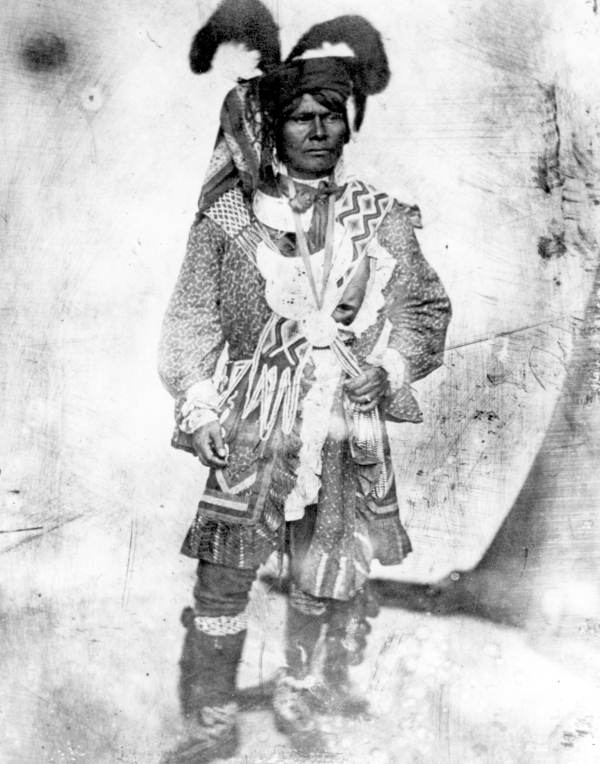 Seminole chief Billy Bowlegs during his visit to Washington D.C. 1852
Upon learning that the US Military intended to violate the terms of the Macomb treaty which had promised to not remove the Seminole from Florida, combined forced attacked a trading post and U.S. Army encampment along the Caloosahatchee River near modern North Fort Myers. The terms of the treaty had enraged white settlers of Florida who demanded the Seminoles complete removal. To calm the settlers, Secretary of War Joel Poinsett published a public letter stating that the terms of the Macomb treaty were meant to be temporary and that removal would occur. Thus the Seminole forces considered the Macomb treaty to be fraudulent and attacked. At dawn on this day in 1839, Native forces attacked in two parties both the US Army camp and the trading post killing most of the soldiers including Sergeant John Bigelow, and capturing 30 Colt ring lever rifles, an advanced gun for the time. The forces were led by Holata Micco, Hospertarke and Chakaika and involved united Miccosukee, Muscogee, and Seminole peoples. The battle was one of the major successes for Native people in the Seminole war and led to three more years of the Second Seminole War. Unfortunately for history, Lieutenant Colonel William Harney who was in charge of these troops survived this attack. He is remembered for murdering an enslaved woman named Hannah of which he was acquitted, and became known by the Lakota as 'Woman Killer' for a brutal massacre of Lakota women and children, for fighting against the guerilla forces for abolition in Bleeding Kansas, for presiding over the 1868 Fort Laramie Treaty which led to the Ponca Trail of Tears and created the Great Sioux Reservation which the US then promptly stole from the Lakota.