Solar Eclipse occurs over New England, considered a good omen for Metacom's rebellion forces
June 27, 1675
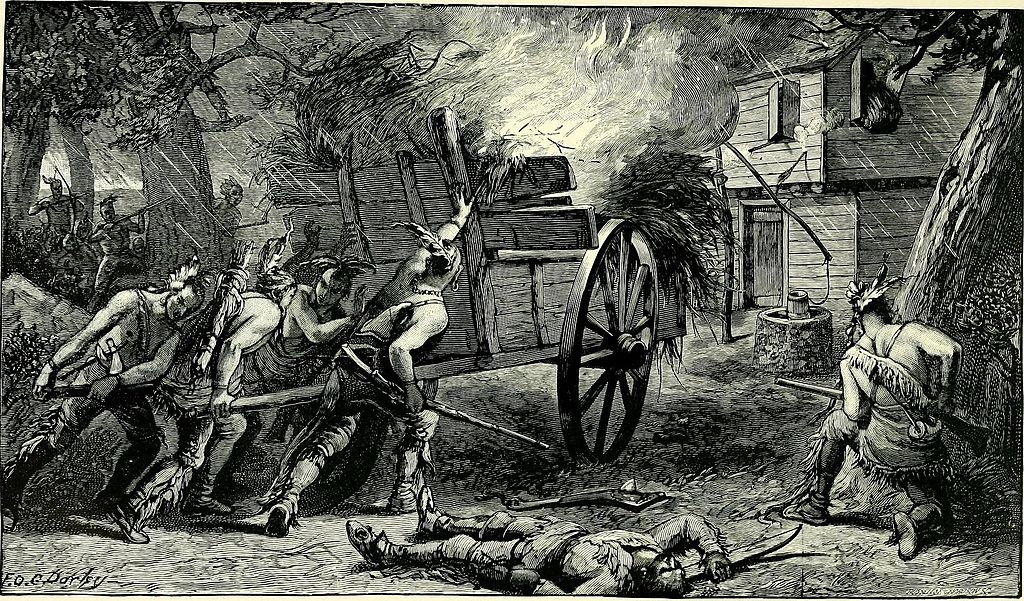 Illustration credited to F.O.C. Darley (1822-1888), from “Soldiers in King Philip’s War” by George M. Bodge, 1906
In 1662 Metacom became sachem of the Pokanotek and Grand Sachem of the Wampanoag Confederacy following the death of his brother, who had succeeded Massasoit. Metacom believed his brother was poisoned, one factor which led to the war. The following decade was a time of increasing settler intrusion into Wampanoag lands and heightened tensions between colonists and Indigenous peoples. In particular, the settlers ignored frequent complaints from Native peoples of their swine and cattle free ranging into Native farms and hunting lands. More broadly, the Pequot War of the 1630's also laid the groundwork. Another specific contributor to the opening of the war was the June 8th execution of three Wampanoags by hanging for the murder of John Sassamon, a Native translator and advisor to Metacom. The death of Sassamon was used as a pretext to seize the land around Assawompset Pond which was the center of a land dispute. In this month bands of Pokanokets attacked settlers and the rebellion spread to include Podunk and Nipmuc peoples as well. The Narragansetts, who tried to remain neutral, were forced to join the war as well after they were brutally attacked by settlers at the Great Swamp Massacre. While there was a wide confederacy of Algonquin language family Nations, Metacom was unable to secure support from their neighbors, the Mohawks. This among other things led to their eventual defeat, and Metacom's death in August of 1676. Metacom remains a hero to many Indigenous peoples in New England and beyond. In this early war of resistance 2/3 of towns in New England were attacked with more than half left 'in ruin'. One of every 10 white men of military age in Massachusetts Bay was killed, and settlers were forced back basically to coastal areas. Thousands of Native warriors were killed and hundreds (possibly a thousand) sold into slavery in the Caribbean, Spain, and Portugal. For settlers, the war was the beginning of a uniquely American identity, based in racism against Native peoples and settler colonialism which endures today.