Narváez expedition departs Spain to colonize Florida. 4 of 600 survive
June 17, 1527
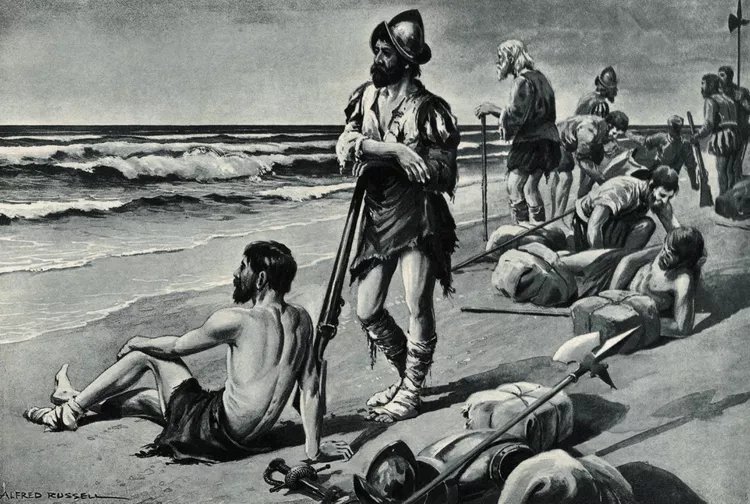 Bettmann Archive / Getty Images
On December 25, 1526, Charles V, Holy Roman Emperor granted Pánfilo de Narváez a license to claim what is now the Gulf Coast of Mexico for the Kingdom of Spain. His intent was to claim Florida for Spain and establish colonies. The colonial expedition was a massive disaster, with desertations, storms, disease, starvation, and hostilities from the Indigenous peoples they were stealing from among their many tribulations. Only four of the expedition's original members survived, reaching Mexico City in 1536. The animosity caused by the Narvaez expedition was such that it took the Spanish years to establish a settlement in Florida. Narvaez has gone down in history as one of the most ruthless yet incompetent conquistadors of the colonial era. Although not remembered by name or with much detail, we celebrate the Native people who resisted this early attempt at colonization in the Americas today.