Igbo Landing Mass Suicide
May 24, 1803
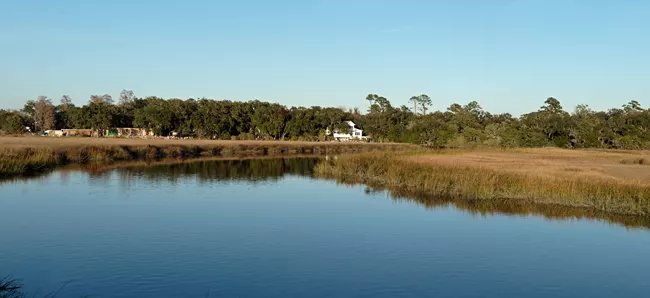 Location of Igbo Landing Jud McCranie
From the historical marker at the site: "In 1803, Igbo captives (also Ibo or Ebo) from West Africa revolted while on a slave ship in Dunbar Creek. It is believed that at least ten Igbo drowned, choosing death over enslavement. The Gullah Geechee, descendants of enslaved West Africans along the southeastern US coast, passed down the story of the Igbo's suicide through oral tradition. The tradition, illustrated by the Igbo saying, "The water brought us here, the water will take us away," highlights the use of water as a means for the enslaved Igbo to escape back to Africa. Many works by prominent African-American authors and artists feature similar stories of water or spiritual flight as symbols of resistance." The Igbo people drowned their captors and took control of the ship which was transporting them. Igbo people are from west Africa in what is now Nigeria. How many people were involved is unclear. There were about 75 captives and 13 bodies were recovered from the creek. From BlackPast website: "Regardless of the numbers, the deaths signaled a powerful story of resistance as these captives overwhelmed their captors in a strange land, and many took their own lives rather than remain enslaved in the New World. The Igbo Landing gradually took on enormous symbolic importance in local African American folklore. The mutiny and subsequent suicide by the Igbo people was called by many locals the first freedom march in the history of the United States." From Nat'l Museum African American History & Culture "Igbo Landing holds symbolic importance within African American folklore as a powerful and evocative story of resistance against enslavement. It inspired tales of Africans flying or walking on water to return home... As the myths, legends, and oral histories surrounding the event persist, the truth endures at the center of it all— freedom by any means."
Exact date from when a historical marker was erected. Happened on an unknown date in May 1803
Exact date from when a historical marker was erected. Happened on an unknown date in May 1803