Yaqui Revolt
May 15, 1740
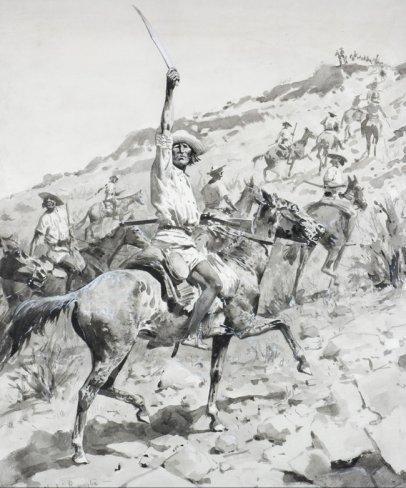 Uprising of the Yaqui Indians" by Frederic Remington, 1896.
Jesuits and Spanish colonial missions competed with one another for control of mining in Yaqui homelands in the 1600 and early 1700s. In 1684 silver was discovered in the Rio Yaqui Valley and Spanish colonial presence increased. In early 1740, two Yaqui leaders Juan Ignacio Usacamea (Muni) and Bernabé Basoritemea, traveled to Mexico City to voice their complaints but the uprising began while they were away. In May 1740, Juan Calixto Ayamea, a Yaqui military leader united Pima, Tehuecos, Ocoronis, Ahomes, and Mayo peoples along with the Yaquis to a force of at least 6,000 men. All mining operations in Sonora and Sinaloa were halted and Governor Huidobro fled. The terrified governor reported their forces to be 12,000 to 14,000. The two Yaqui leaders who went to Mexico City to raise their concerns about forced labor and the forced land dispossession of their peoples were arrested by Jesuit leaders on their return which also inflamed the rebellion. The revolt was ended by December of that year, with the Jesuits never regaining the level of control they previously held in the area. This was the first major resistance to Spanish colonial rule in the area and would be followed by a long series of revolts by both the Mayos and Yaquis lasting well into the nineteenth century. The Jesuits were completely banished from Spanish controlled areas in 1767.