Indigo Revolt in India
March 1, 1859
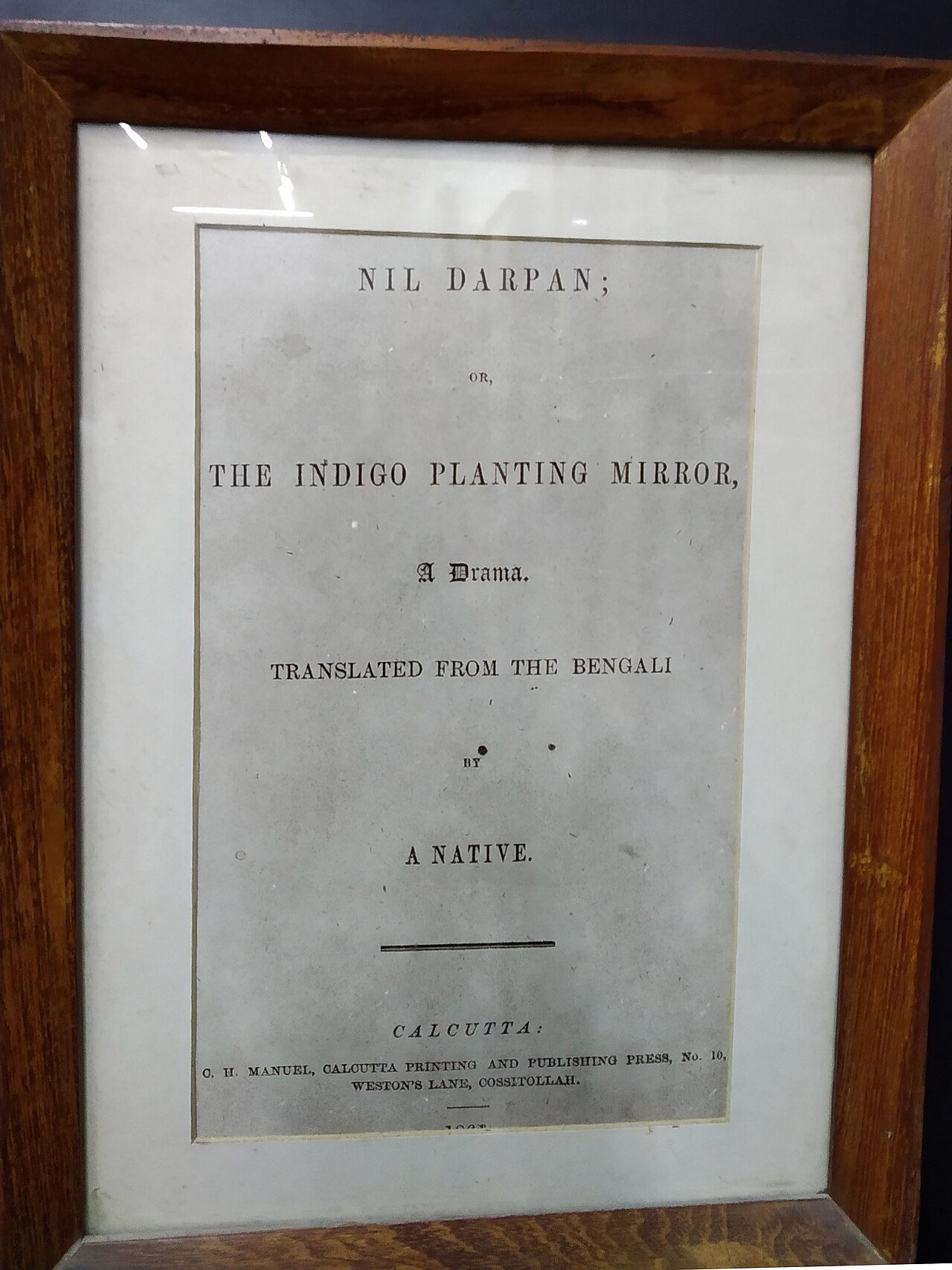 Dinabandhu Mitra's 1860 play Nil Darpan was published in Dhaka and was based on the revolt. It was translated into English by poet Michael Madhusudan Dutta and published by Anglican priest James Long. For publishing the play, Long was put on trial by the colonial authorities and sentenced to a period of imprisonment and fine of 1,000 rupees.
Summarized from Britannica:
Sometime in March of 1859, ryots (peasant farmers) of a village in Bengal’s Nadia district all agreed to refuse to grow any more indigo. Peasant farmers were forced to grow Indigo to benefit the British cotton textile industry—whose tremendous growth had been spurred by the Industrial Revolution—led the British East India Company to pursue an exploitative system of indigo cultivation in Bengal and Bihar. Ryots were paid less for indigo, than what they could earn for growing rice or other crops. The ryots often did not earn enough to pay back the advance payment, and they easily fell into a cycle of debt and exploitation. Their uprising was successful, with most Indigo planters being forced from Bengal area within ten years. The British government also passed the Indigo Act and created an Indigo Commission to investigate the indigo cultivation system in Bengal.
Sometime in March of 1859, ryots (peasant farmers) of a village in Bengal’s Nadia district all agreed to refuse to grow any more indigo. Peasant farmers were forced to grow Indigo to benefit the British cotton textile industry—whose tremendous growth had been spurred by the Industrial Revolution—led the British East India Company to pursue an exploitative system of indigo cultivation in Bengal and Bihar. Ryots were paid less for indigo, than what they could earn for growing rice or other crops. The ryots often did not earn enough to pay back the advance payment, and they easily fell into a cycle of debt and exploitation. Their uprising was successful, with most Indigo planters being forced from Bengal area within ten years. The British government also passed the Indigo Act and created an Indigo Commission to investigate the indigo cultivation system in Bengal.