First Treaty of Casco signed
April 12, 1678
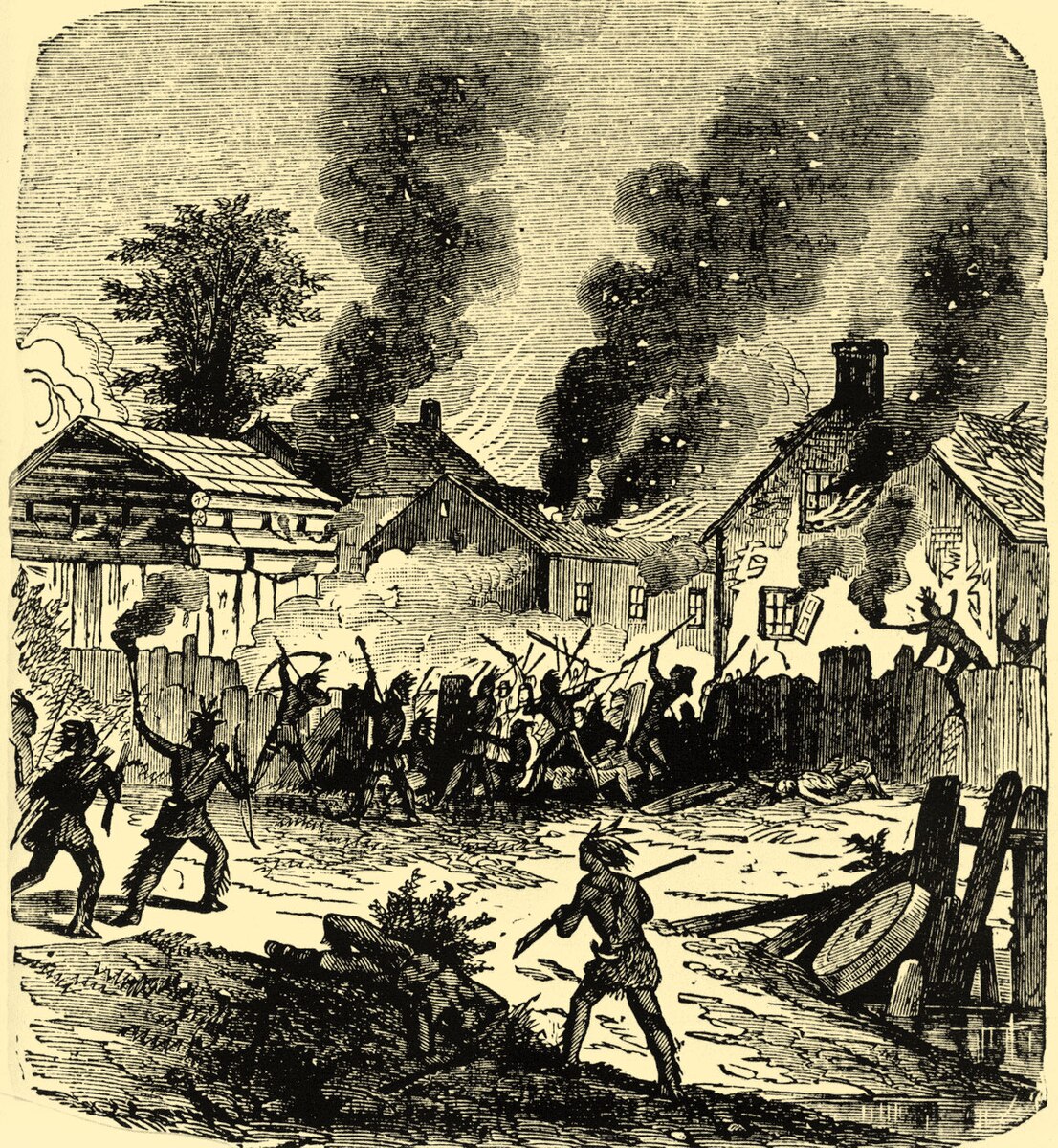 King Philip's War - Capture of Brookfield, Massachusetts. Artist unknown, California State Library
Sometimes referred to as the First Abenaki War, or the Northern Theatre of Metacom's Rebellion (King Philips War), this treaty signaled the end of this particular Indigenous rebellion. The Wabanaki (Dawnland) Confederacy tribes including Abenaki, Mi'kmaq, Wolastoqiyik, Passamaquoddy (Peskotomahkati) and Penobscot, fought from 1675 to 1678 and their resistance was successful in "blunting the tide of English expansion". Many colonists left what would become inland Maine and Massachusetts to more coastal areas. The treaty is notable in that it is possibly the first example of settlers being required to pay rent or what would later be called annuities as part of the settlement. Indigenous peoples considered this tribute of corn to symbolize continuing Abenaki sovereignty over Maine. English settlers refused to abide by the terms whatsoever, blocking fish passage upriver to Wabanaki villages, letting their livestock and swine ravage Native farmlands, and continuing exploitative trading practices, and kidnapping Indigenous people for the slave trade, all of which led to the King Williams war.