Riot in Farmington NM distrupts Police, Sheriff and US Cavalry parade
July 8, 1974
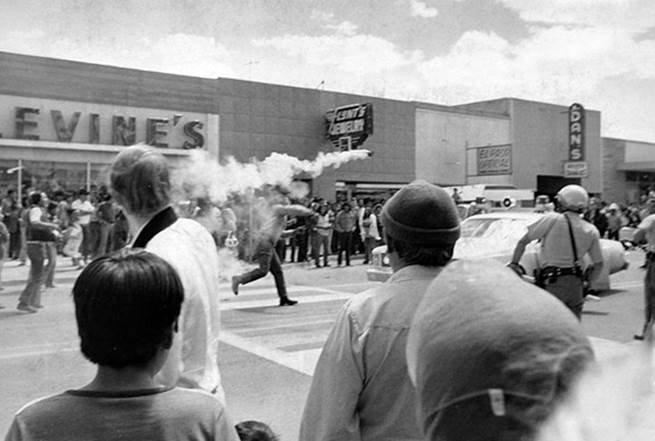 Farmington amid escalating racial tensions provoked by the torture murders of three Navajo men. Farmington Daily Times photo.
Following the Chokecherry Massacre of April 1974, in which three Navajo men, Herman Benally, John Harvey, and David Ignacio were brutally tortured and murdered by white teens, Indigenous people organized marches in the small city of Farmington NM for weeks on end. The marchers numbered in the thousands, with Indigenous peoples coming from all over, reflecting the widespread understanding that these killings were not isolated incidents but reflected the deep racism of reservation bordertowns such as Farmington and the colonial system as a whole. Large peaceful marches were held May 4, 11, 18, 25, and June 1st, all drawing large crowds of Indigenous peoples as well as allies with the NAACP and others, as the people tried to hold the city to their demands. When organizers applied for the permit for the next saturday June 8th they were denied as the San Juan County Sheriff was planning to hold a parade that day. The day before the white cop parade, the families of the murder victims were told they could not attend the court hearing because of new rules concerning the juvenile court. The murderers were given a slap on the wrist, ultimately serving less than two years at a reform school. The next day, Indigenous people decided to disrupt the racist police parade and a riot occurred in Farmington NM. Of particular offense to Diné (Navajo) people was the fact that the Sheriff’s Posse Parade wore traditional U.S. Cavalry uniforms, the same as worn by soldiers in the Long Walk when the Diné were relocated from their ancestral lands. John Redhouse remembers, "Thirty-one of us were arrested on that day, but at least we stopped the parade and, in stopping the parade, we stopped the advance of the racist cavalry unit. Sometimes, you have to stop racism with your bodies." (page 64 Bordertown Clashes). Ultimately the marchers did win some of their demands, one of which was public hearings by the US Civil Rights Commission. They would issue a report based on the hearings condemning the racist bordertown titled The Farmington Report: A Conflict of Cultures which validated many Indigenous peoples experiences. The full report is linked.