Battle of Julesburg
Jan. 7, 1865
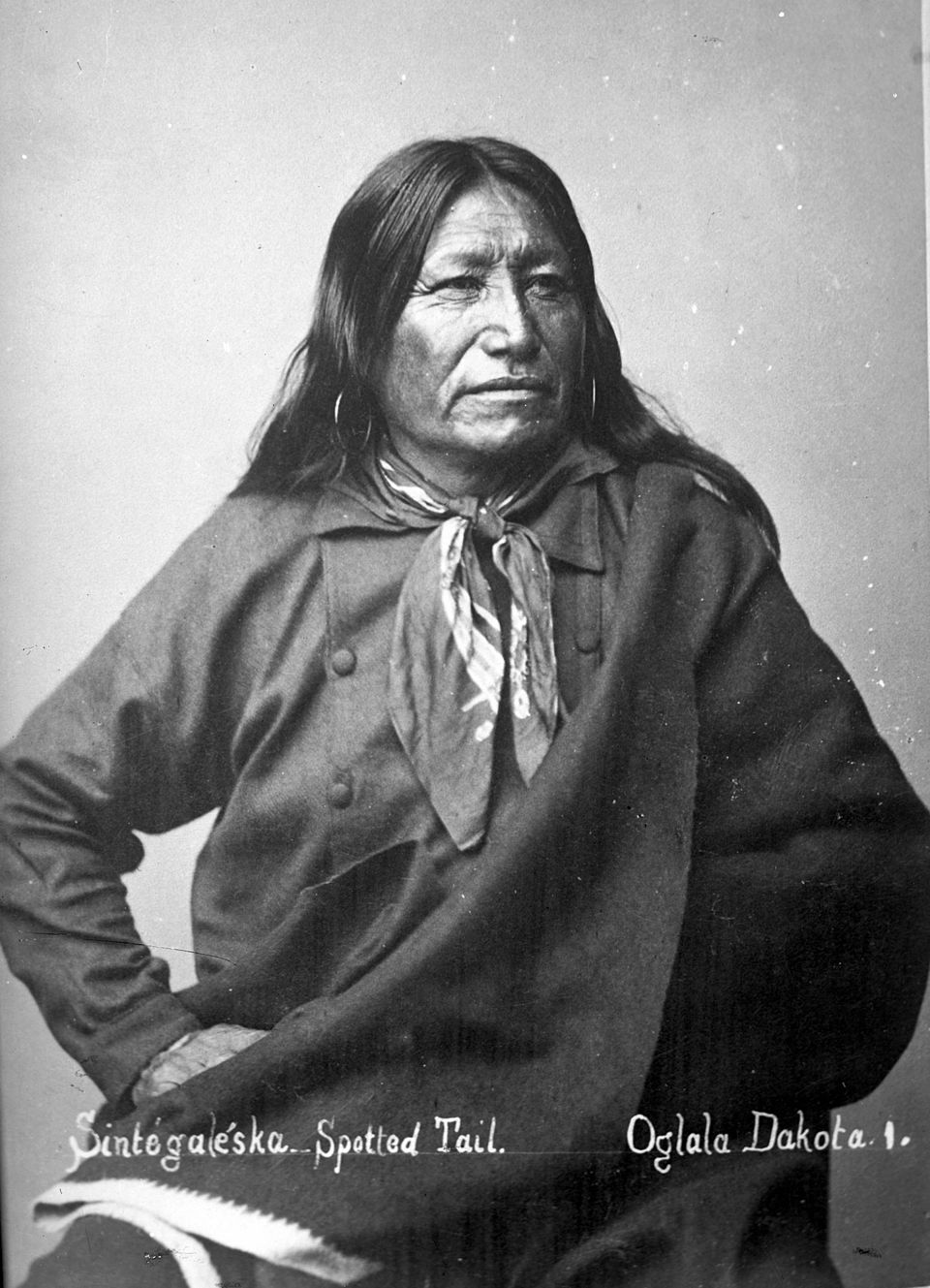 Sintegaleska (Spotted Tail), Sichangu (erroneusly classified as Oglala) Dakota Chief, wearing scarf, jacket and blanket
On this day in 1865, about five weeks after the Sand Creek Massacre, 1,000 Cheyenne, Arapaho, and Lakota Indians attacked about 60 soldiers of the U.S. army and 40 to 50 civilians. Indigenous forces defeated the soldiers and over the next few weeks plundered ranches and stagecoach stations up and down the South Platte River valley. The attack followed a January 1 meeting between the groups involved on how to respond to the Sand Creek massacre. In the meeting were the Cheyenne Dog Soldiers, the Northern Arapaho, and two bands of Lakota Sioux, the Sichangu under Siŋté Glešká (Spotted Tail), and the Oglala under Pawnee Killer. This increase in hostilities in response to the Sand Creek massacre is sometimes referred to as the Colorado and Platte River uprising or Spotted Tail's War. Siŋté Glešká (Spotted Tail) was the uncle of the famous warrior Tȟašúŋke Witkó (Crazy Horse), which meant he was a relative of Maȟpíya Ičáȟtagya (Touch the Clouds) as well. The fort they attacked was formidable, measuring 240 by 360 feet (73 by 110 metres), and ringed by a sod wall 18 feet (5.5 m) tall. Big Crow, a Cheyenne, picked ten men as the decoys. They charged at the fort and retreated in haste. Captain O'Brien led most of his men and a few civilian volunteers out of the fort to chase the decoys. Alerted to the trap just before reaching it, the military turned and fled back towards the fort. The Native warriors caught them about 300 yards from the fort, killing fourteen soldiers and four civilians. There were no Native casualties. After the attack most of the warriors headed back towards the Black Hills, raiding ranches and stagecoaches along the way.