Māori land march led by Te Rōpū O Te Matakite o Aotearoa (Those with Foresight) begins
Sept. 14, 1975
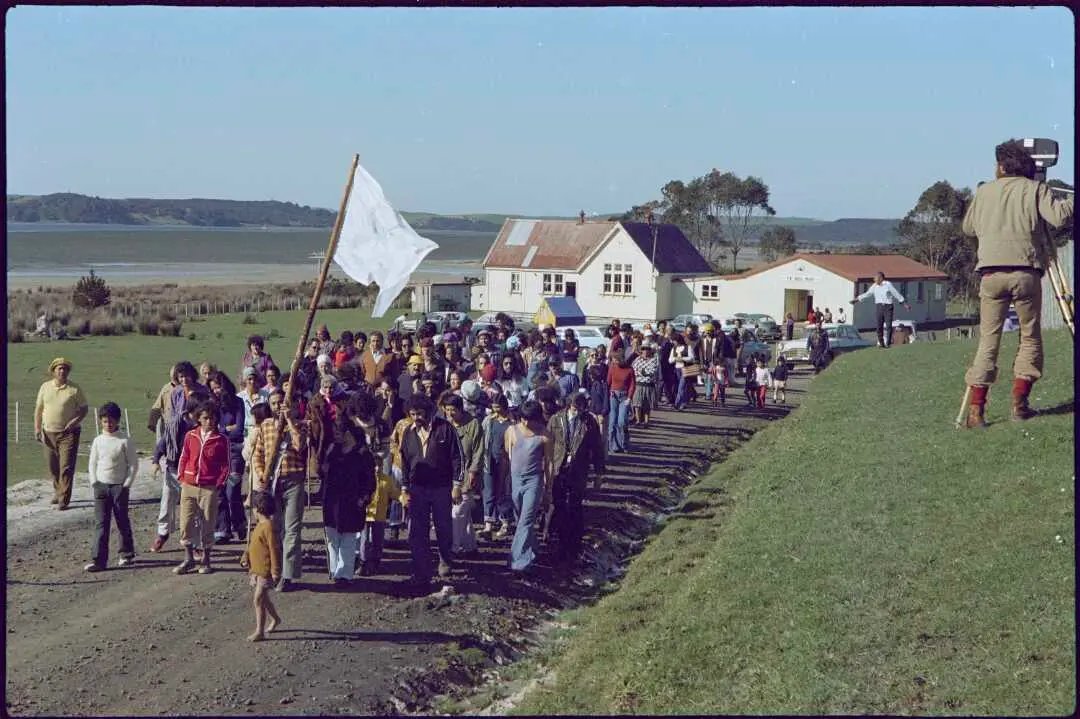 Participants in Māori land march leaving Te Reo Mihi Marae, Te Hapua, 14 September 1975,by Christian Heinegg,
Ref: 35mm-87491-2 Alexander Turnbull Library.
Participants in Māori land march leaving Te Reo Mihi Marae, Te Hapua, 14 September 1975,by Christian Heinegg,
Ref: 35mm-87491-2 Alexander Turnbull Library.
Led by Dame Whina Cooper, the hīkoi (march) started in Northland on 14 September, travelled the length of the North Island, and arrived at the parliament building in Wellington on 13 October 1975. The purpose of the march was to protest the loss of Māori rights and land. More than 5000 people participated. In particular the march was in response to the ongoing theft of Māori lands from the 1953 the Māori Affairs Act meant to enable the use of what was called "unproductive Māori land". Applicants to the Māori Land Court could apply to have land vested in trustee ownership. The Māori Affairs Amendment Act 1967 introduced compulsory conversion of Māori freehold land with four or fewer owners into general land. The march was led by respected elder Whina Cooper and organizers also included the more radical young activist group Ngā Tamatoa. It was meant to raise awareness of "twin themes of landlessness and cultural loss" and to appeal to a broad coalition of Māori. A commonly used slogan for the march was "Not one more acre of Māori land". At the end of the march, they presented a petition signed by 60,000 people that called for an end to monocultural land laws which excluded Māori cultural values, and asked for the ability to establish legitimate communal ownership of land within iwi.