La Amistad slave revolt
July 1, 1839
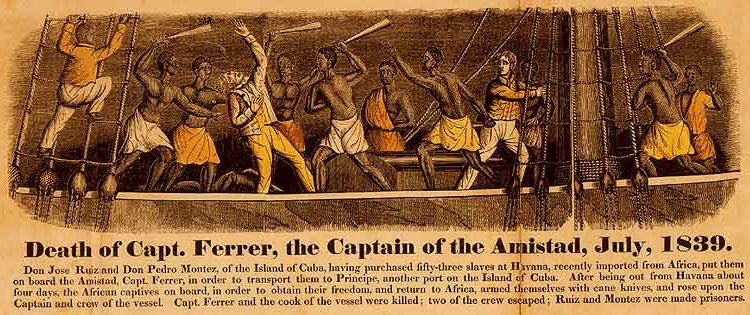 "Death of Capt. Ferrer, the Captain of the Amistad, July 1839." Caption: "Don Jose Ruiz and Don Pedro Montez of the Island of Cuba, having purchased fifty-three slaves at Havana, recently imported from Africa, put them on board the Amistad, Capt. Ferrer, in order to transport them to Principe, another port on the Island of Cuba. After being out from Havana about four days, the African captives on board, in order to obtain their freedom, and return to Africa, armed themselves with cane knives, and rose upon the Captain and crew of the vessel. Capt. Ferrer and the cook of the vessel were killed; two of the crew escaped; Ruiz and Montez were made prisoners."
On this day in 1839, 53 Mende captives led a slave revolt on board the ship La Amistad. They had been captured and enslaved in Mendiland (in modern-day Sierra Leone), sold to European slave traders and illegally transported from Africa to Havana, where they were to be sold to sugar plantations. The trans-Atlantic slave trade was abolished legally long before domestic slavery or slave trading itself was abolished. In the United States and Britain it was banned in 1808, which is what made the transport illegal although domestic slavery remained legal. After finding a file, the captive people removed their manacles while below decks and went above armed with cane knives, successfully taking command of the ship and killing the captain and cook. They instructed the remaining sailors to return to Africa, which they did not do, instead taking the ship towards the United States where they hoped to regain control of the ship. In late August the ship was taken into custody in the United States which led to an important court case, United States v. The Amistad. The case was widely publicized and helped the wider abolitionist cause in addition to securing the freedom and return to Africa of the Mende captives.