Christiana Rebellion
Sept. 11, 1851
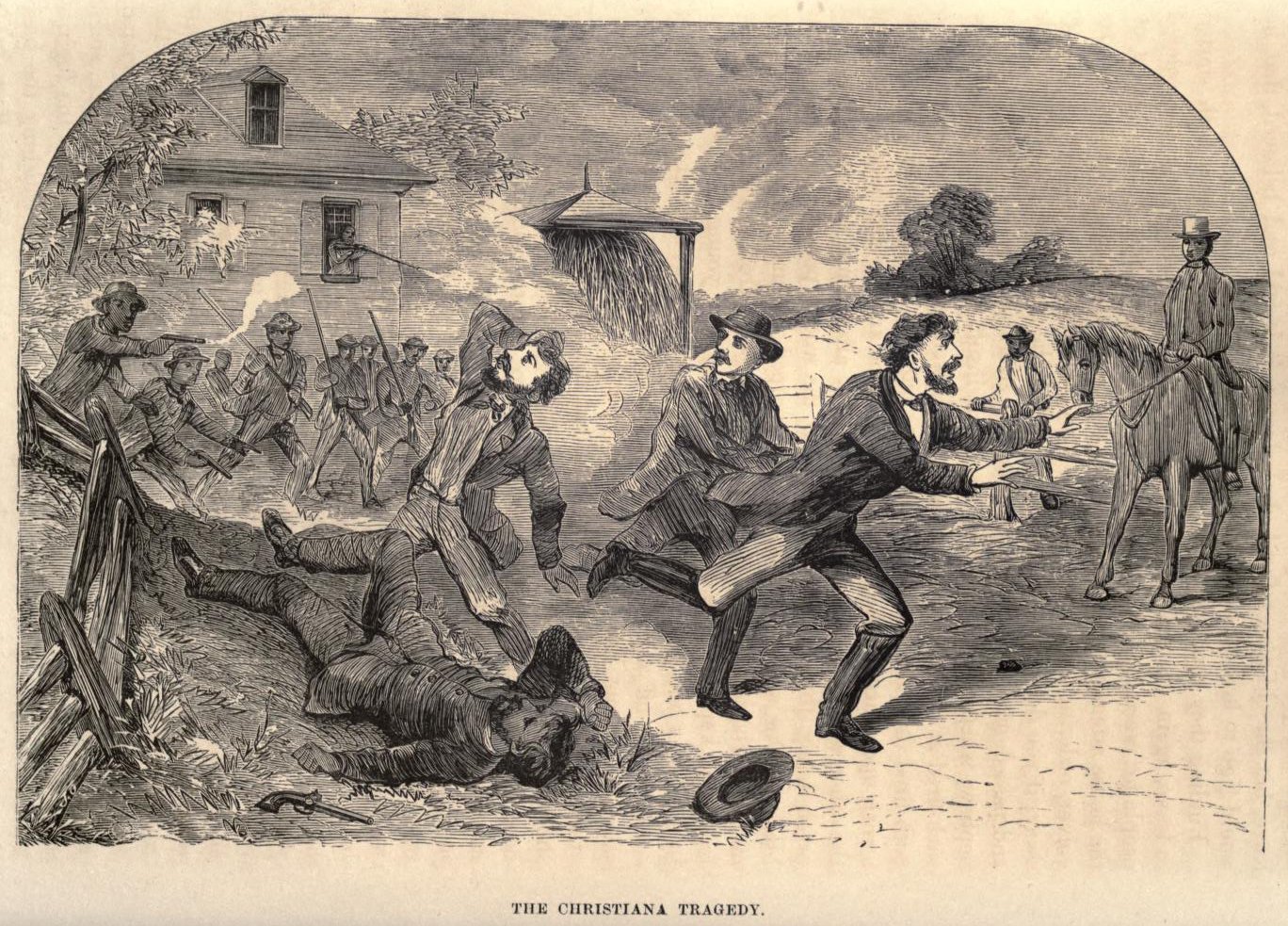 Print from the 1871 book "The Underground Rail Road" (p. 350) by William Still depicts the shooting and fleeing.
One year after the passage of the Fugitive Slave Law, Edward Gorsuch, a slaveholder from Maryland came to the community of Christiana in Pennsylvania to rekidnap four people who had escaped his enslavement. These individuals were hiding at the home of William Parker, himself an escaped slave and abolitionist who had organized a Black self defense group or mutual protection society. Parker and the people in his self defense group had a network to alert Black people when slave catchers were in the area and they also organized rescues of captive enslaved peoples. On the day Gorsuch and his posse which included Federal Marshalls came to try to re-enslave his four former slaves, Parker and others in his group were armed and prepared. In the ensuing gun battle, Gorsuch was killed and his son wounded. Following the shooting, Parker and the four escapees went into hiding, and were personally helped by Frederick Douglass, who secured their passage into Canada by ferry across the Niagara River to Canada. Parker, his wife Eliza, and their three children eventually settled in a black community in Buxton, Ontario. Back in Pennsylvania, 41 indictments were handed down over the incident including charges of treason. 36 of the 41 peoples charged were Black. All the charges were dropped after the first one to be tried was acquitted by the jury. This event is an inspiring story of Black people's successful armed struggle for their liberation, of self organization, and of fighting against unjust laws. Beyond that, it is also historically important as it is considered and important precursor to the Civil War