Powhatan attack on English settlers called "Indian massacre of 1622". Part of the Anglo-Powhatan wars.
March 22, 1622
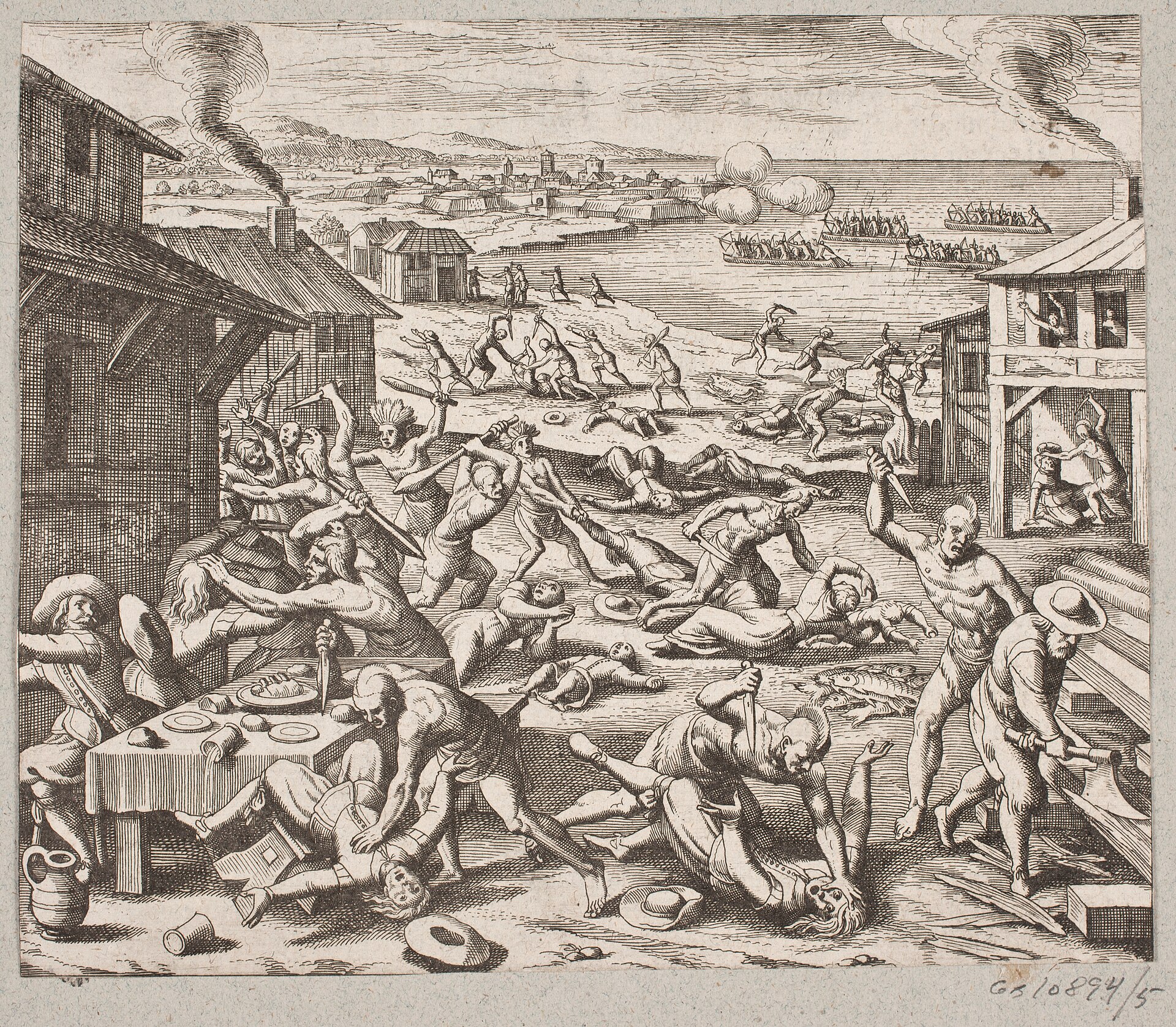
An attack on the English colony in Virginia led by Opechancanough, brother to the leader of the Powhatan confederacy (Wahunsenacawh). Opechancanough was known to be strongly oppossed to English settlers. He was a leader throughout much of the 1600's in what were known as the Anglo-Powhatan wars. He is also known for capturing settler John Smith where his brothers young daughter Matoaka (incorrectly refered to as Pocahontas) supposedly intervened on the settlers behalf. By the time of this massacre in 1622, the Powhatan confederacy had been at war since 1609 in opposition to the settlers. In particular this colony was based on tobacco cash crop which required ever more land due to their practices which quickly degraded farmland. The surprise attack resulted in the destruction of about 1/3 of the colonists with deaths estimated between 350-400. The immediate aftermath was a meeting between the Powhatans and the settlers to negotiate the release of captives taken in the raid where the settlers poisoned the drink and caused ~200 deaths. This attack was nearly successful in destroying the colony. Unfortunately, afterwards the colony became Crown controlled and settler encroachment continued with huge numbers of settlers sent from Europe. The attack was used as a propaganda piece to justify horrors done against all Native peoples in the area. From a Virginian settler at the time: "We, who hitherto have had possession of no more ground than their waste and our purchase at a valuable consideration to their own contentment (...) may now by right of war, and law of nations, invade the country, and those who sought to destroy us: whereby we shall enjoy their cultivated places."
It also led to the third Anglo-Powhatan war in the 1640's which in turn led to Bacon's Rebellion.
It also led to the third Anglo-Powhatan war in the 1640's which in turn led to Bacon's Rebellion.