Battle of Pine Creek or Battle of Tohotonimme (Schi̱tsu'umsh (Coeur d'Alene), Palouse and Spokane Victory)
May 17, 1858
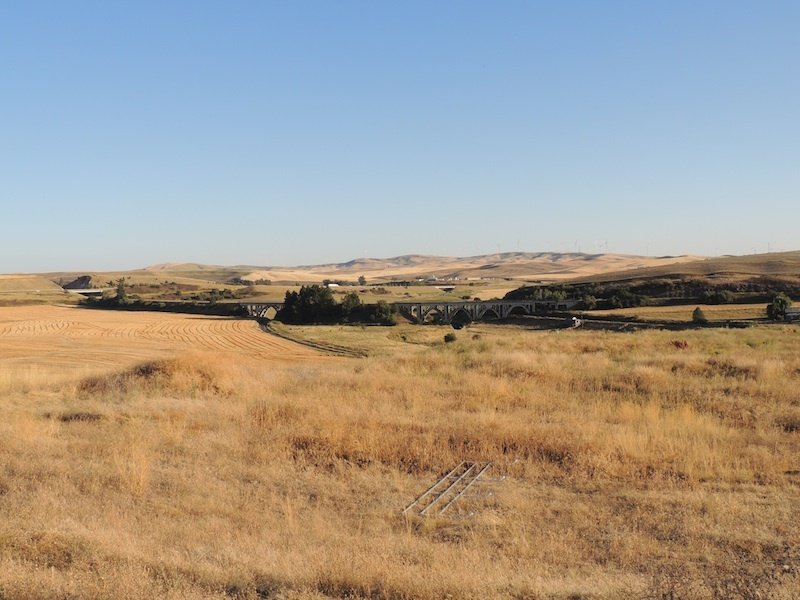 The valley where the battle was fought is now home to wheat and legume fields. Nearby is the town of Rosalia. Photo: Lea Anne Scott 9/12
Within the context of the Yakima War which began in 1855, this battle is considered a part of the Spokane-Coeur d'Alene-Pend d'oreille-Paloos War or the second half of the Yakima War. There was a generalized uprising against settler encroachment and forced bad treaties under Isaac Stevens across the Pacific Northwest from 1855-1858. Rumors that Lieutenant John Mullan would build a military road across their land also fueled the outrage of tribes in the region. Earlier in 1858, Palouse people killed two miners as an act of vengeance for conflicts with tribal members. Fearing further violence, whites living at nearby Fort Colvile petitioned Steptoe for military protection. Brevet Lieutenant Colonel Edward Steptoe and 164 riflemen departed Fort Walla Walla to investigate the killings and "demonstrate a military presence in order to calm the white settlers." His crossing of the Snake river was in direct violation of Isaac Stevens promise to the Spokane tribe. On May 16th, Tribal leaders went to his camp and demanded to know the reason for his incursion. The next morning after deciding to turn back, his forces were attacked near the confluence of Spring Valley Creek and North Pine Creek. A running battle ensued with Schi̱tsu'umsh (Coeur d'Alene), Palouse and Spokane warriors attacking. As night fell, the Native forces withdrew to finish the battle in the morning, not knowing that US forces were down to three rounds of ammunition per man. Under cover of darkness and rain, Steptoe abandoned his supplies and cannon and ran back to Fort Walla Walla, defeated. Out of Steptoe’s command a total of seven men died, including two officers, four enlisted men, and one Indian. At least six, and perhaps as many as 13, others were wounded.