Britain forced to sign a treaty with Jamaican Maroon leader Nanny
April 20, 1740
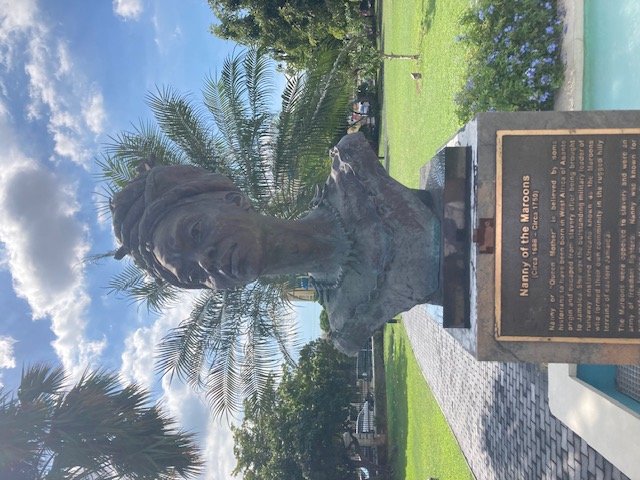 A bust of Nanny of the Maroons
Maroon communities of escaped enslaved peoples existed in Jamaica from the time of Spanish colonialism and control of Jamaica. In particular, the Windward Maroons were majority from west Africa, Akan groups who escaped slavery and intermarried with Taíno, or island Arawak peoples. In 1655, Great Britain took the island of Jamaica during the Anglo-Spanish War. When the Spanish left, they "freed" a large amount of enslaved peoples who greatly boosted the existing numbers of maroons. These communities led fierce resistance to English colonialism and slavery for many years. The First Maroon War is considered to be from 1728 to 1740, and Nanny of the Maroons was one leader of the windward maroons, now honored as the only female National Hero of Jamaica. They led many slave rebellions and raids on plantations. Nanny was highly successful at organizing plans to free slaves. During a period of 30 years, she was credited with freeing more than 1000 slaves, and helping them to resettle in the Maroon community. Their tactics were guerilla warfare. The maroon soldiers were so proficient at disguising their location that the British would circulate tales of trees in the forest becoming alive and cutting one's head off. The treaty in 1740 granted Nanny and her followers 500 acres, and they did unfortunately agree to not harbor any further fugitive slaves. This clause would cause a lasting rift between the formerly allied Maroon community and enslaved Black community.