Tla-o-qui-aht and Ahousaht First Nations declare Wah-Nah-Jus Hilth-hoo-is (Meares Island) a tribal park
April 21, 1984
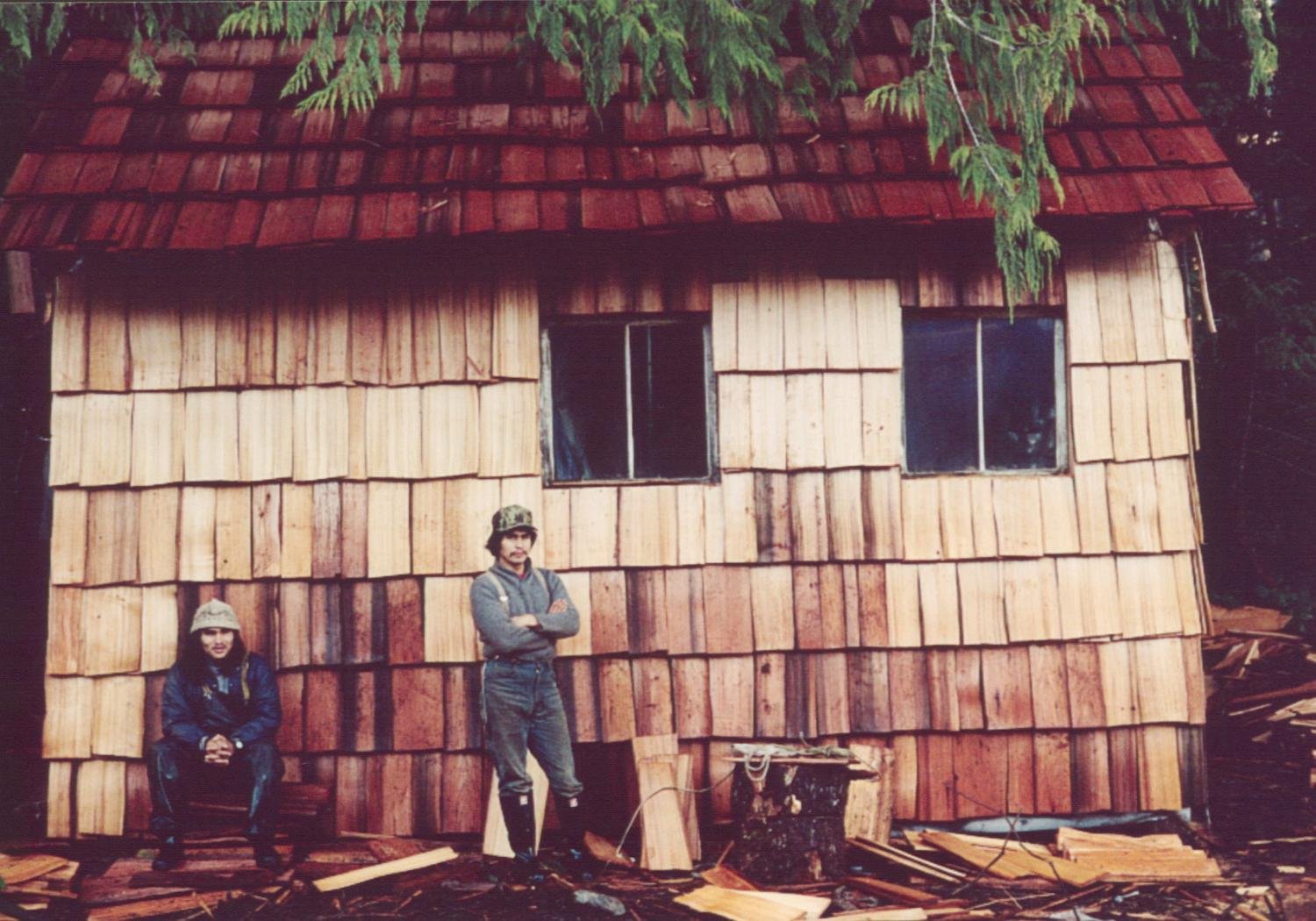 Carl and Joe Martin, nephews of Tla-o-qui-aht Chief Moses Martin, outside a protector cabin built to house blockaders on Meares Island in the mid-1980s. The effort to protect Meares Island was among the opening salvos in British Columbia’s so-called War in the Woods.
Logging company MacMillan Bloedel announced their intention to log Wah-Nah-Jus Hilth-hoo-is (Meares Island) in 1979. The island is the territory of the two Nuu-chah-nulth Nations and they and residents of Tofino opposed the logging, Meares Island being where Tofino drinking water comes from, among other issues. Despite opposition, the BC Government in November 1983 that it would open up roughly 90 per cent of Meares Island to logging. Following the declaration of the tribal park, MacMillan Bloedel approached the island’s shore on Nov. 21, 1984, Moses Martin, then the elected chief of the Tla-o-qui-aht, greeted them. First, he read a statement asserting the Tla-o-qui-aht’s title to the island. Then he asked them to join him for a meal. “‘You’re welcome to visit our park,’” Martin recalled saying years later. “‘But leave your saws in the boat.’” The logging crew declined the invitation and left. The blockade continued for months and on March 27, 1985, the court sided with the Tla-o-qui-aht in an historic 3-2 decision. Meares Island remains without the scars of clearcuts today. The blockade was also an important early struggle for Indigenous sovereignty and against logging which would continue into the 1990s in the larger Clayoquot Sound area.