Battle of Yellow House Canyon (Nʉmʉnʉʉ and Apache victory)
March 18, 1877
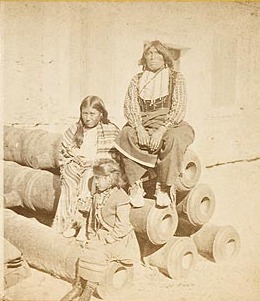 Chief Black Horse Family, wife, and daughter Akhah. New York Public Library'
The Battle of Yellow House Canyon was a battle between a force of Nʉmʉnʉʉ (Comanche) and Apaches against a group of American bison hunters organized into a militia that occurred near present-day Lubbock, Texas. It was the final battle of the Buffalo Hunters' War, and was the last major fight involving the United States and Native Americans on the High Plains of Texas. At this point, Nʉmʉnʉʉ and Apache people had been mostly forcibly removed from the area, but the land between the Arkansas River and the Canadian River had been reserved as hunting grounds for Indigenous peoples as part of the 1867 Medicine Lodge Treaty. Native people in 'Indian Territory' could get passes to go hunt in the area. In December 1876, Tu-ukumah (Black Horse) received a permit to hunt in their territory from Fort Sill. Angered at white hunter's flagrant over hunting and intentional, genocidal slaughter of buffalo, he and his allies began attacking bison hunters from their base camp at Yellow House Canyon. One incident in February, they killed buffalo hunter Marshall Sewell, who had killed buffalo after buffalo in one spot until he ran out of ammunition. They also raided other hunter's camps. A militia was formed to attack the Nʉmʉnʉʉ and Apache camp, and on this day in 1877 they located the camp and attacked. Women in the Native camp ran towards the horsemen discharging pistols, while the warriors set up a defensive position. The spirited defense surprised the Texans, who withdrew. Although the Native's tried to flank them, the Texans retreated back down the canyon and the Nʉmʉnʉʉ and Apache set a grass fire to act as a screen against further attack. By mid-afternoon the Texans ordered a full retreat. Today we remember those warriors who tried to save the buffalo for their people and were able to escape the forced removal for a time. By the winter of 1878–1879, the main herd of buffalo on the South Plains had been destroyed despite these brave efforts by Indigenous resistors.