Protests in Trinidad and Tobago lead to Black Power Revolution
Feb. 26, 1970
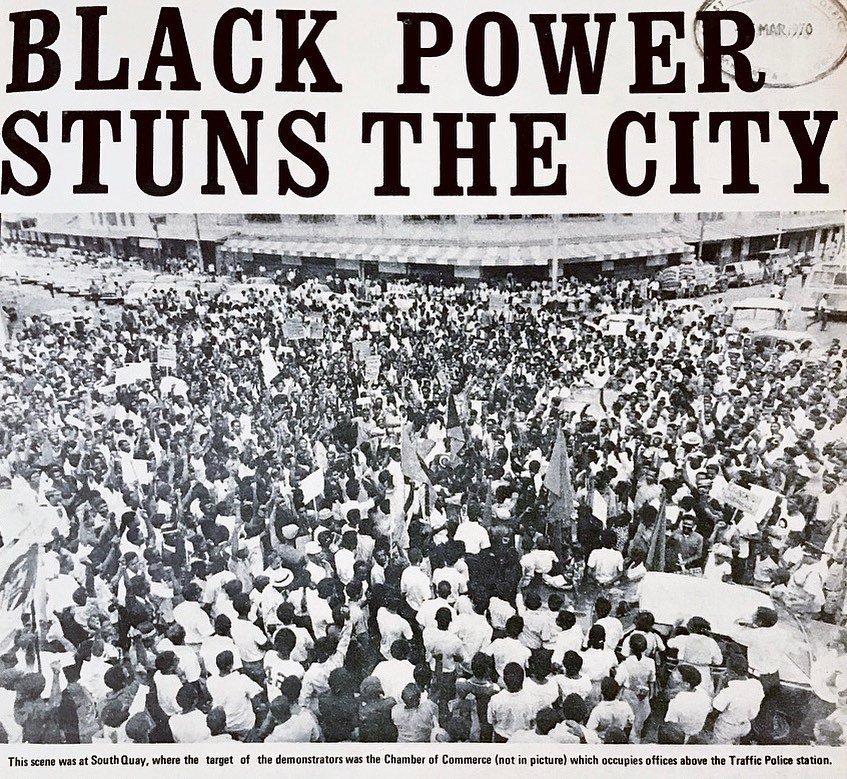 This Trinidad Express front page shows a photo of protestors gathering for a Black solidarity march outside the Chamber of Commerce in South Quay on March 4th 1970. It is courtesy of the Trinidad Express, published on Thursday 5th March, 1990.
Students in Port-of-Spain Trinidad take to the streets in support of Black students (including Trinidadians) in Montreal, Canada facing trial for the occupation of Sir George Williams University over racism they faced there. The students in Trinidad picketed the Canadian High Commission and the Royal Bank of Canada’s local office before occupying a cathedral. The following day state forces arrest 9 leaders of the movement which increased tensions, and cause more demonstrations demanding their release. Protests against racism in the country continued after their release was secured March 4. On April 6, police forces kill a protestor and member of National Joint Action Committee, Basil Davis. On April 18 sugar workers went on strike. Prime Minister declares a state of emergency April 21 and arrested 15 Black Power leaders. Responding in turn, a portion of the Trinidad Defense Force, led by Raffique Shah and Rex Lassalle, mutinied and took hostages at the army barracks at Teteron. Outside of this rough outline of the events of early 1970, we encourage you to read further at the Trinidad and Tobago National Archives, or to watch the film 1970: Remembering a Revolution.