Sir George Williams Affair -- occupation in Montreal
Jan. 29, 1969
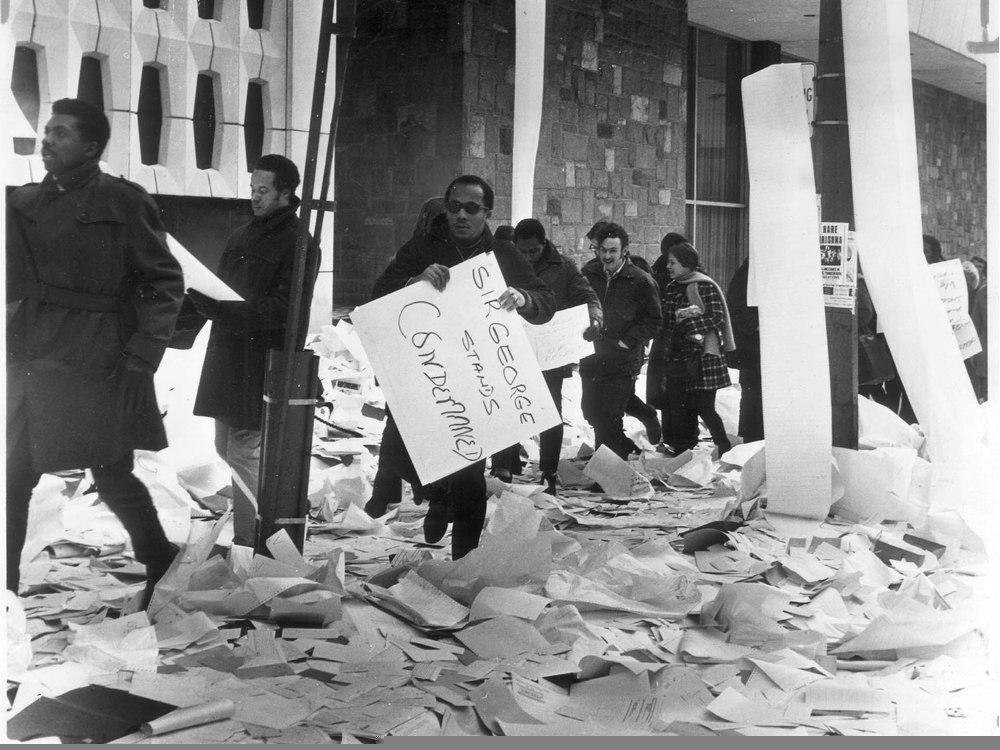 “Sir George Williams University stands condemned” (Montreal, February 11, 1969)
On this day in 1969, students occupied the computer center at Sir George Williams University in Montreal. The occupation followed 8 months of waiting for a response from the university concerning they May 1968, accusations by six West Indian students of discrimination by biology professor Perry Anderson. The university administration was dismissive of the students and defensive of the professor, refusing to give the students a copy of the report which cleared him of any wrongdoing. Following two Black Power conferences in the city, and a student newspaper report on the issue, on January 29, 1969, over 400 students occupied the university's computer lab. After a peaceful occupation and negotiations, on February 10, 1969, an agreement was reached where the students agreed to leave the Hall Building in exchange for a new committee to examine the allegations of prejudice against Anderson. However, most of the students refused to leave. The occupation continued until February 11, when negotiations broke down and riot police were called in to storm the Hall Building. A fire broke out in the computer lab, forcing the occupiers out of the building; 97 of them were arrested. Rodney John, one of the original six students, stated "The violence was perpetuated — I have no hesitation saying this — by the police and the administration. Are students going to start a fire when they’re locked in?"
The occupation and subsequent trials had an effect across not only Canada but the West Indies, including being an important factor in the 1970 Black Power Revolution in Trinidad and Tobago. Racial hatred across Canada was inflamed with many blaming 'lax' immigration laws for the occuption. Among those arrested and convicted were Roosevelt Douglas, who later became Prime Minister of Dominica. One protestor, Coralee Hutchison, suffered head trauma during the confrontation with police. She was hospitalized and later died.
The professor was reinstated on February 12, 1969, and, on June 30, the Hearing Committee appointed to the case found that "there was nothing in the evidence (before them) to substantiate a general charge of racism." He was found not guilty of racism towards the six complainants.
The occupation and subsequent trials had an effect across not only Canada but the West Indies, including being an important factor in the 1970 Black Power Revolution in Trinidad and Tobago. Racial hatred across Canada was inflamed with many blaming 'lax' immigration laws for the occuption. Among those arrested and convicted were Roosevelt Douglas, who later became Prime Minister of Dominica. One protestor, Coralee Hutchison, suffered head trauma during the confrontation with police. She was hospitalized and later died.
The professor was reinstated on February 12, 1969, and, on June 30, the Hearing Committee appointed to the case found that "there was nothing in the evidence (before them) to substantiate a general charge of racism." He was found not guilty of racism towards the six complainants.