Birthday of Lehman L. Brightman (Lakota and Muscogee Creek)
April 28, 1930
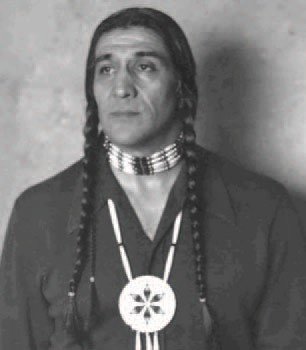
From Lakota Times memorial:
Lehman L. Brightman was a ‘icke wicasa’, or common man in Lakota. A ‘icke wicasa’, lives by the principles of that term, in that he does not put himself above others, works as a warrior for his people, and lives his life in a good way, with respect and caring for the people. Lehman Brightman, a proud Sioux and Creek Indian was born April 28, 1930 to Lehman (Poogie) Brightman, Muscogee Creek, Eufaula, Oklahoma and Phoebe Kingman Brightman on the Cheyenne River Sioux Reservation in South Dakota. Lehman grew up in Indian Country, living in Oklahoma and on the Cheyenne River Sioux Reservation, where his mother’s people were from. Growing up, he saw the unjust treatment of fellow Native people and he saw the poverty. His experiences and strong sense of social justice would shape his life as a leader, a teacher and an activist. In 1968, he founded United Native Americans, an Indian nonprofit organization to promote the progress and general welfare of American Indians. In 1969, he established and coordinated the first Native American Studies program in the United States at UC Berkeley while he was working on his Doctorate Degree. Lehman continued his career as a professor at the University of California – San Diego, Sacramento State University, DQU and Contra Costa College. Lehman’s activism began in the Bay Area, but it extended worldwide. Lehman was involved in the occupation of Alcatraz and the takeover of Wounded Knee, and led the takeover of Mt. Rushmore in South Dakota in 1970. Lee opened his home to Dennis Banks when he was a fugitive after the conflict at Wounded Knee, because he followed the way of an ‘icke wicasa’. Lehman led investigations into seven Indian boarding schools and reservation hospitals, testifying in two U.S. Senate hearings on the poor service and abusive treatment of Indian people. He voiced his outrage about the sterilization of Native women in Indian hospitals and the medical experiments performed on Native people, including children without their full knowledge and consent.
Lehman was an eloquent speaker and as a Sundancer, he held strong traditional spiritual beliefs. He was a son, a husband and father, a veteran, an activist, an educator, an author, an academic, a publisher, a leader, an elder and an ‘icke wicasa.’
In his honor and legacy, may we all fight the good fight for our people.
In his own Words: “Every mile of this country is stained with Indian blood, and every mile contains the bones of our ancestors. They fought and died that we may be here. The least we the living can do is to continue that fight. We are American Indians.” Lehman Brightman
Lehman L. Brightman was a ‘icke wicasa’, or common man in Lakota. A ‘icke wicasa’, lives by the principles of that term, in that he does not put himself above others, works as a warrior for his people, and lives his life in a good way, with respect and caring for the people. Lehman Brightman, a proud Sioux and Creek Indian was born April 28, 1930 to Lehman (Poogie) Brightman, Muscogee Creek, Eufaula, Oklahoma and Phoebe Kingman Brightman on the Cheyenne River Sioux Reservation in South Dakota. Lehman grew up in Indian Country, living in Oklahoma and on the Cheyenne River Sioux Reservation, where his mother’s people were from. Growing up, he saw the unjust treatment of fellow Native people and he saw the poverty. His experiences and strong sense of social justice would shape his life as a leader, a teacher and an activist. In 1968, he founded United Native Americans, an Indian nonprofit organization to promote the progress and general welfare of American Indians. In 1969, he established and coordinated the first Native American Studies program in the United States at UC Berkeley while he was working on his Doctorate Degree. Lehman continued his career as a professor at the University of California – San Diego, Sacramento State University, DQU and Contra Costa College. Lehman’s activism began in the Bay Area, but it extended worldwide. Lehman was involved in the occupation of Alcatraz and the takeover of Wounded Knee, and led the takeover of Mt. Rushmore in South Dakota in 1970. Lee opened his home to Dennis Banks when he was a fugitive after the conflict at Wounded Knee, because he followed the way of an ‘icke wicasa’. Lehman led investigations into seven Indian boarding schools and reservation hospitals, testifying in two U.S. Senate hearings on the poor service and abusive treatment of Indian people. He voiced his outrage about the sterilization of Native women in Indian hospitals and the medical experiments performed on Native people, including children without their full knowledge and consent.
Lehman was an eloquent speaker and as a Sundancer, he held strong traditional spiritual beliefs. He was a son, a husband and father, a veteran, an activist, an educator, an author, an academic, a publisher, a leader, an elder and an ‘icke wicasa.’
In his honor and legacy, may we all fight the good fight for our people.
In his own Words: “Every mile of this country is stained with Indian blood, and every mile contains the bones of our ancestors. They fought and died that we may be here. The least we the living can do is to continue that fight. We are American Indians.” Lehman Brightman