Women's War Nigeria (Igbo: Ogu Umunwanyi; Ibibio and Annang: Ekong Iban)
Nov. 18, 1929
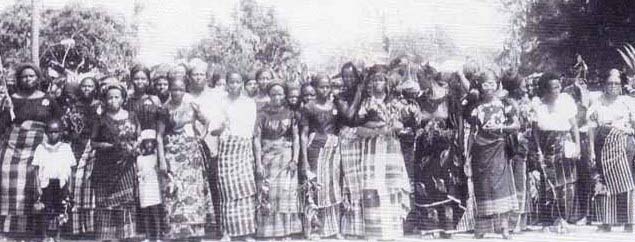 60th Anniversity re-enactment of Women's Protest during Womens War of 1929. Courtesy National Museum Uyo
The protests broke out when thousands of Igbo women from the Bende District, Umuahia and other places in Nigeria traveled to the town of Oloko to protest against the Warrant Chiefs, whom they accused of restricting the role of women in the government. The protest encompassed women from six ethnic groups (Igbo, Ibibio, Andoni, Ogoni, Efik, and Ijaw). Using the traditional practice of censoring men through all night song and dance ridicule (often called “sitting on a man”), the women chanted and danced, and in some locations forced warrant chiefs to resign their positions. The women also attacked European owned stores and Barclays Bank and broke into prisons and released prisoners. The Aba Women’s war prompted colonial authorities to drop their plans to impose a tax on the market women, and to curb the power of the warrant chiefs. The women’s uprising is seen as the first major challenge to British authority in Nigeria and West Africa during the colonial period.