John Chilembwe Day (anti-Colonial revolt in Nyasaland, now Malawi)
Jan. 15, 1915
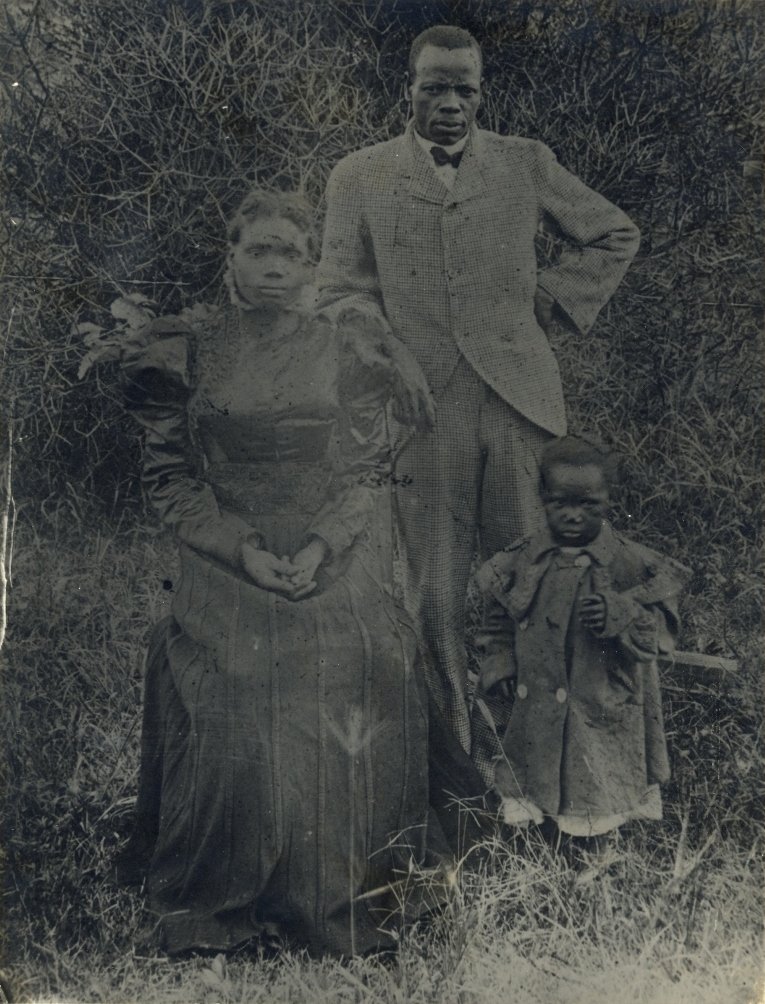 John Chilembwe, with his wife Ida, and one of their children. Date unknown.
John Chilembwe was a Baptist pastor, educator and revolutionary from Nyasaland (now Malawi) who trained as a minister in the United States, returning to Nyasaland in 1901. He was an early figure in the resistance to colonialism in Nyasaland, opposing both the treatment of Africans working in agriculture on European-owned plantations and the colonial government's failure to promote the social and political advancement of Africans.
Soon after the outbreak of the First World War, Chilembwe organised an unsuccessful armed uprising against colonial rule, and was killed shortly thereafter by colonial forces. He was against African's fighting in WWI and a letter he wrote to the newspaper which was censored pushed him to enact the revolt. His anti-war letter stated that a number of his countrymen, "have already shed their blood", others were being "crippled for life" and "invited to die for a cause which is not theirs". This caused the colonial authorities to attempt to deport him.
Although he was a religious leader he used the phrase "Africa for the Africans" which show his politics beyond religion. Chilembwe is said to have drawn parallels between his rising and that of John Brown, and stated his wish to "strike a blow and die" immediately before the rising started.
He and 200 followers staged an uprising on January 23, 1915 with the aim to kill all male Europeans. The revolutionaries killed three British subjects, including a particularly corrupt plantation owner named William J. Livingston, who they beheaded in front of his wife and daughter. When the uprising failed to gain local support, Chilembwe fled to Mozambique, where he was killed by African soldiers on February 3, 1915.
Nyasaland gained independence in 1964, taking the name Malawi. John Chilembwe Day is observed annually on 15 January in Malawi and his portrait is on the 2000-kwacha note.
Soon after the outbreak of the First World War, Chilembwe organised an unsuccessful armed uprising against colonial rule, and was killed shortly thereafter by colonial forces. He was against African's fighting in WWI and a letter he wrote to the newspaper which was censored pushed him to enact the revolt. His anti-war letter stated that a number of his countrymen, "have already shed their blood", others were being "crippled for life" and "invited to die for a cause which is not theirs". This caused the colonial authorities to attempt to deport him.
Although he was a religious leader he used the phrase "Africa for the Africans" which show his politics beyond religion. Chilembwe is said to have drawn parallels between his rising and that of John Brown, and stated his wish to "strike a blow and die" immediately before the rising started.
He and 200 followers staged an uprising on January 23, 1915 with the aim to kill all male Europeans. The revolutionaries killed three British subjects, including a particularly corrupt plantation owner named William J. Livingston, who they beheaded in front of his wife and daughter. When the uprising failed to gain local support, Chilembwe fled to Mozambique, where he was killed by African soldiers on February 3, 1915.
Nyasaland gained independence in 1964, taking the name Malawi. John Chilembwe Day is observed annually on 15 January in Malawi and his portrait is on the 2000-kwacha note.