Western Samoa gains independence from New Zealand.
Jan. 1, 1962
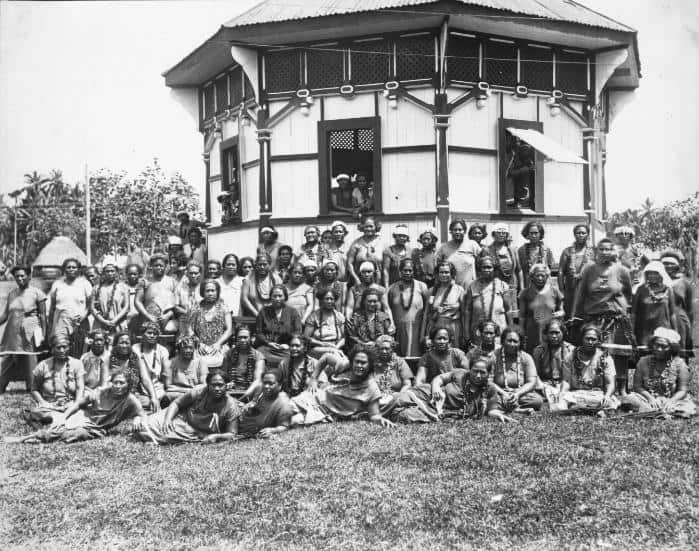 Women’s Mau leaders and committee in front of octagonal Mau office, circa 1930. Source: Alfred John Tattersall, Public domain, via Wikimedia Commons
As a result of the Mau movement for Samoan independence, Western Samoa gains independence from New Zealand. Samoa had a complex colonial history, with New Zealand only being the latest unwelcome colonial overlords, who were appointed as rulers under a League of Nations mandate after Germany lost World War I. Among other wrongs, the New Zealand colonial government was responsible for allowing a ship carrying influenza to dock in 1919, causing the deaths of ~8,500 Samoans around 22 per cent of the population. The Mau was a largely non-violent movement which used a wide variety of tactics including civil disobedience, refusal to pay taxes, not registering deaths and births, picketing stores to prevent the payment of customs, and refusing the meet or speak with colonial officials. Samoan independence was won in 1962, making it the first Pacific nation to achieve self-governance in the post-World War II period.