Fort Laramie Treaty Negotiations begin following Red Cloud's War
April 29, 1868
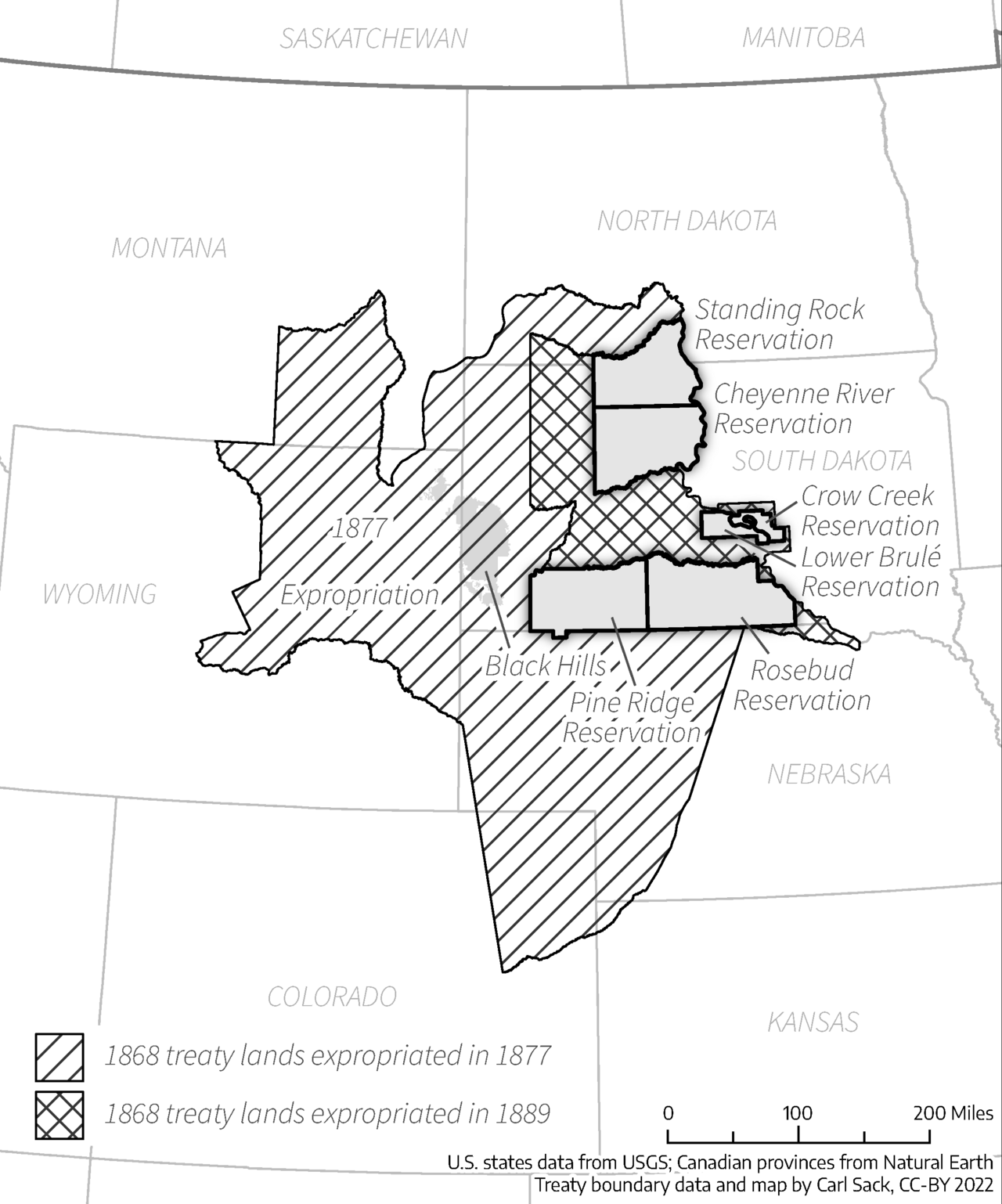 Congress' 1889 expropriation and partition of Sioux lands
After the Lakota and Cheyenne win at Battle of the Hundred in Hand, the US Army came to make peace talks. The U.S. agreed to abandon its forts and withdraw from Lakota territory. Treaty negotiations established the Great Sioux Reservation. As remembered by Ohíyesa (Charles A Eastman), Maȟpíya Lúta (Red Cloud) was the final signatory, "having refused to do so until all of the forts within their territory should be vacated. All of his demands were acceded to, the new road abandoned, the garrisons withdrawn, and the new treaty distinctly stated that the Black Hills and the Big Horn were Indian countries, set apart for their perpetual occupancy and that no white man should enter that region without the consent of the Sioux."
This treaty is very important to Lakota peoples today, and it is also highly significant to the Ponca, who were not included whatsoever in the treaty negotiations. These led to what is called the Ponca Trail of Tears, as the entire Ponca Reservation was sold to the Lakota as part of this agreement, which was actively breaking a separate agreement the United States had made with the Ponca.
This treaty is also historically significant in that it was made towards the end of the treaty era, being one of the last signed. The United States almost immediately broke their promises when gold was discovered in the Black Hills.
It formed the basis of the 1980 Supreme Court case, United States v. Sioux Nation of Indians, in which the court ruled that tribal lands covered under the treaty had been taken illegally by the US government, and the tribe was owed compensation plus interest. As of 2018 this amounted to more than $1 billion. The Sioux refused the payment, having demanded instead the return of their land which would not be possible to contest if the monetary compensation was accepted.
This treaty is very important to Lakota peoples today, and it is also highly significant to the Ponca, who were not included whatsoever in the treaty negotiations. These led to what is called the Ponca Trail of Tears, as the entire Ponca Reservation was sold to the Lakota as part of this agreement, which was actively breaking a separate agreement the United States had made with the Ponca.
This treaty is also historically significant in that it was made towards the end of the treaty era, being one of the last signed. The United States almost immediately broke their promises when gold was discovered in the Black Hills.
It formed the basis of the 1980 Supreme Court case, United States v. Sioux Nation of Indians, in which the court ruled that tribal lands covered under the treaty had been taken illegally by the US government, and the tribe was owed compensation plus interest. As of 2018 this amounted to more than $1 billion. The Sioux refused the payment, having demanded instead the return of their land which would not be possible to contest if the monetary compensation was accepted.