Lyng v. Northwest Indian Cemetery Protective Association
April 19, 1988
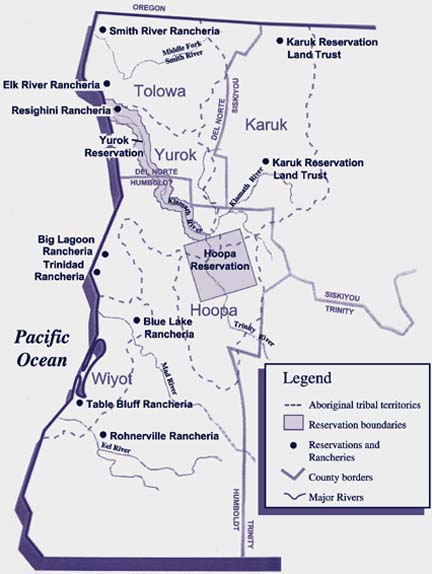 Sources: BIA edition 2000, California Indian Trust Land William Bright, 1957. The Karok Lanugage. UCPL 13
Precedent setting Supreme Court decision on interpretation of the 'Free exercise' clause of the first amendment to the US Constitution which supposedly protects freedom of religion. An organization representing Native groups in northwestern California which exists to protect ceremonial sites and cemetaries sought to block the expansion of a road for logging because it would decimate religious sites. About 15,000 Native peoples live in the area, including Tolowa, Yurok, Wiyot, Hupa, Karok, Modoc, Klamath and Shasta peoples. Northwest Indian Cemetery Protective Association was founded in 1970 to respond to both grave robbing by settlers as well as to help assist Native peoples trying to block development or other desecration including by archaologists of burial grounds. Their organization has many wins worth celebrating but this case is considered an important precendent setting loss. The proposed road went through an area known as Chimney Rock which is sacred. The US Forest Service Environmental Impact Statement found that the damage done to the land would be severe and irreparable and advised against the road and the logging. The EIS rejected the recommendation and wanted to go forward with the project so the Native group and the state of California sued for an injuction against the project and won. The Forest Service appealed all the way up to the Supreme Court who decided in their favor in this landmark case. Their decision held that the destruction did not violate the Constitution, because it would not force tribal members to violate their religious beliefs or punish them for practicing their religions. This precedent is important to many currently pending cases today and enshrines the basic idea central to the United States which is that Native people's religions and cultural practices are less than that of Euro-Americans. It explicitly allows the wholesale destruction of ceremonial and sacred sites. From the ruling: "Whatever rights the Indians may have to the use of the area, however, those rights do not divest the Government of its right to use what is, after all, its land"