U.S. v. Washington, the Boldt Decision
Feb. 12, 1974
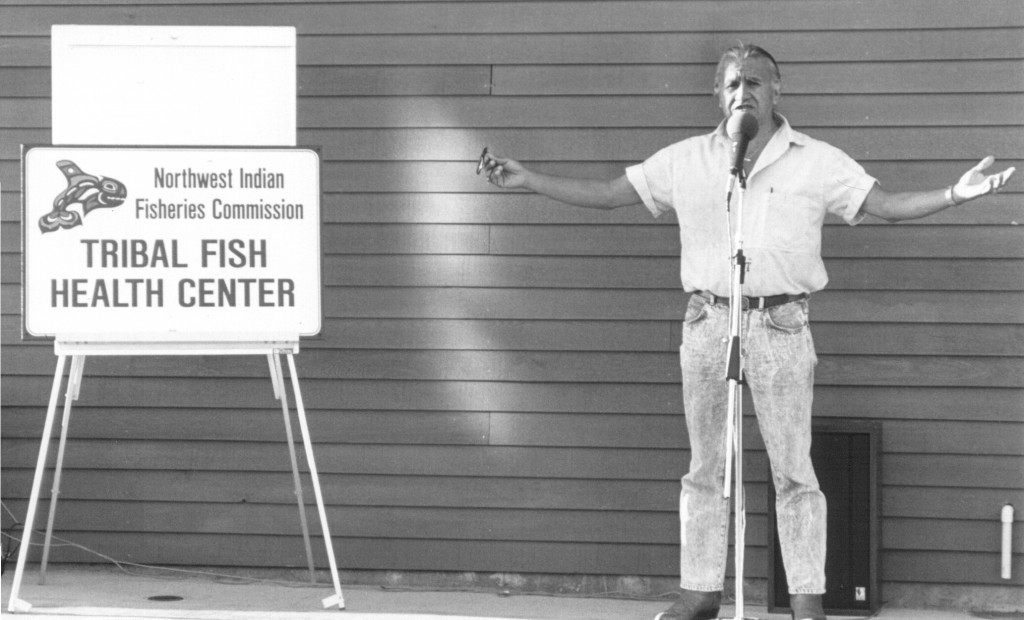 Billy Frank Jr.
Treaties with Tribes in Washington State explicitly reserved the right for Native peoples to fish 'at usual and accustomed' places in the 1850's. This wording is included in
Treaty of Point No Point, Treaty of Point Elliott, Treaty of Olympia, Treaty of Neah Bay, and the Medicine Creek Treaty. With the rise of the Red Power movement in the 1950's and 1960's and the decline of the salmon runs, the right to take fish became a struggle for Indigenous sovereignty in the Pacific Northwest. Before this decision, there were more than 20 other fishing rights cases brought, and countless direct action campaigns by many Washington tribes and individual fishers. This case was filed after Stan Pitkin (US Attorney for western Washington) witnessed the violent repression of the Puyallup fishing camp in Septemeber 1970. The Boldt decision is the law that stands today governing Native fishing. It was challenged all the way to the Supreme Court and upheld. The decision gave the tribes who were parties to the treaties the right to half the catch, with the tribes and the state managing the fishery together. While the decision did hold up the Treaties as the supreme law of the land and attempt to put Washington State government in its place, some view this decision as actually a LOSS of half the fish to the state/ non-Native fishers. It also leaves out non-Treaty tribes such as the Duwamish, Chinook, and Snohomish. The decision led an immediate rise in racist backlash from white fishing groups and individuals which would continue at a high degree until 1979 when the Supreme Court upheld it. Tensions and racist attacks continue today. It also led to the creation of Northwest Indian Fisheries Commission, which co-manages fisheries in Washington State.
Treaty of Point No Point, Treaty of Point Elliott, Treaty of Olympia, Treaty of Neah Bay, and the Medicine Creek Treaty. With the rise of the Red Power movement in the 1950's and 1960's and the decline of the salmon runs, the right to take fish became a struggle for Indigenous sovereignty in the Pacific Northwest. Before this decision, there were more than 20 other fishing rights cases brought, and countless direct action campaigns by many Washington tribes and individual fishers. This case was filed after Stan Pitkin (US Attorney for western Washington) witnessed the violent repression of the Puyallup fishing camp in Septemeber 1970. The Boldt decision is the law that stands today governing Native fishing. It was challenged all the way to the Supreme Court and upheld. The decision gave the tribes who were parties to the treaties the right to half the catch, with the tribes and the state managing the fishery together. While the decision did hold up the Treaties as the supreme law of the land and attempt to put Washington State government in its place, some view this decision as actually a LOSS of half the fish to the state/ non-Native fishers. It also leaves out non-Treaty tribes such as the Duwamish, Chinook, and Snohomish. The decision led an immediate rise in racist backlash from white fishing groups and individuals which would continue at a high degree until 1979 when the Supreme Court upheld it. Tensions and racist attacks continue today. It also led to the creation of Northwest Indian Fisheries Commission, which co-manages fisheries in Washington State.