Lone Wolf v. Hitchcock
Jan. 5, 1903
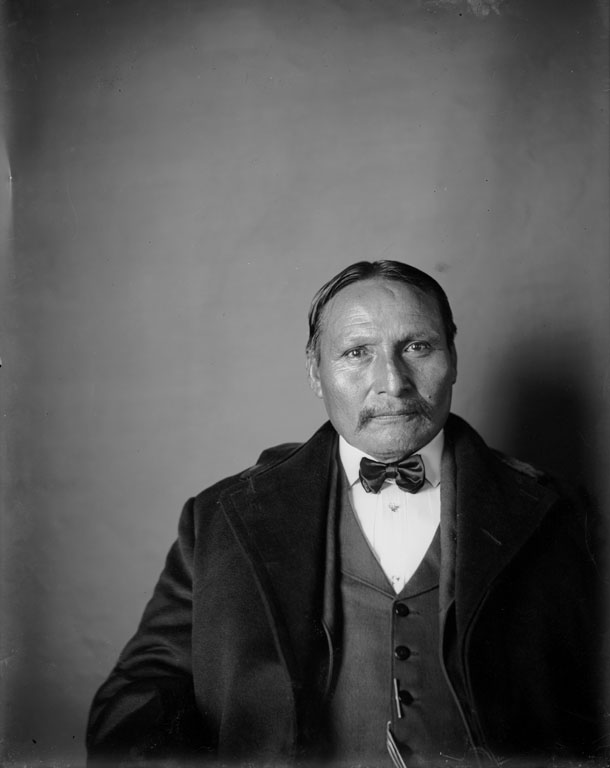 Lone Wolf in Oct 1902. Public Domain. National Anthropological Archives, Smithsonian Institution
US Supreme Court decision which held that the US Congress can pass legislation that changes the terms of tribal treaties without the consent of the tribes with whom the treaties were made. The case was brought by Kiowa chief Ǥûib̶à:gàui (Lone Wolf), who argued that the Medicine Lodge Treaty (1867) was being breached by the United States. In particular, Lone Wolf was fighting against the Jerome Commission, which was forcing allotment onto Indian Lands. Immediately, Lone Wolf and other Kiowa alleged that the Kiowa signatures approving of allotment were obtained fraudulently. He brought a petition to Congress with the signatures of a majority of Kiowa men, opposing allotment. The case eventually made its way to the US Supreme Court which ruled against Lone Wolf, and the decision stands today. It has impact beyond the case as it is considered precedent setting in that the Supreme Court ruled it (the Judiciary Branch) can not question the motives of Congress and that Congress alone has the power to abrogate treaties unilaterally. The decision was based on racist ideas about Native peoples with the ruling stating "It is to be presumed that in this matter the United States would be governed by such considerations of justice as would control a Christian people in their treatment of an ignorant and dependent race." The Kiowas were defrauded of 2 million acres of reservation lands opened to settlement by non-Indians, and the case has been used to pass the buck and force Native peoples in America to go to Congress as their only hope of redress and justice.