Battle of Tippecanoe
Nov. 7, 1811
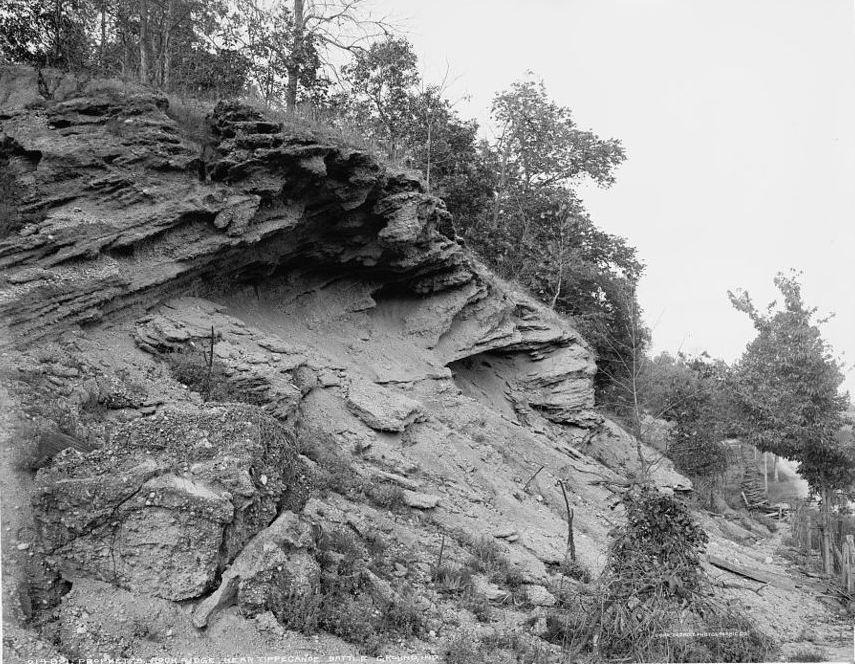 Prophet's Rock near the Tippecanoe battleground about 1902. Tenskwatawa is thought to have sung or chanted from this rock to exhort his warriors against Harrison's forces.
Following his conference with Tecumseh, Indiana Territorial Governor Harrison decided to attack the Native confederacy's stronghold at Tippecanoe, while Tecumseh and his forces were away. The Shawnee leader had departed the meeting with Harrison to travel south to attempt to convince southern Tribes (especially Muscogee and Choctaw) to join the confederacy and fight against settler incursion. He was partially successful in this plan, which you can read more about in entries about the Red Sticks War. Tenskwatawa who was Tecumseh's brother, an important prophet and spiritual leader, was left in Tippacanoe while Tecumseh and his forces were away. Despite Tecumseh still being open to negotiations, Harrison (who was also pro-slavery) insisted on attacking the Native stronghold while Tecumseh was away, saying that statehood for Indiana was threatened by the confederacy's existance and might possibly become "the haunt of a few wretched savages". Harrison attacked the town with 1000 men and won the battle, burning Tippecanoe to the ground, destroying their important winter supplies, and desecrating their cemetary. While this was a major blow to Tecumseh and the uprising, it was not the decisive victory which some historians paint it as and there were more American casualties than Native. Tecumseh continued to resist and lead his confederacy to many successes until his death in battle in 1813. The battle also led to the outbreak of full war declared on England the following summer which strengthened many Indigenous resisters resolve with British allies.