Battle of Point Pleasant
Oct. 10, 1774
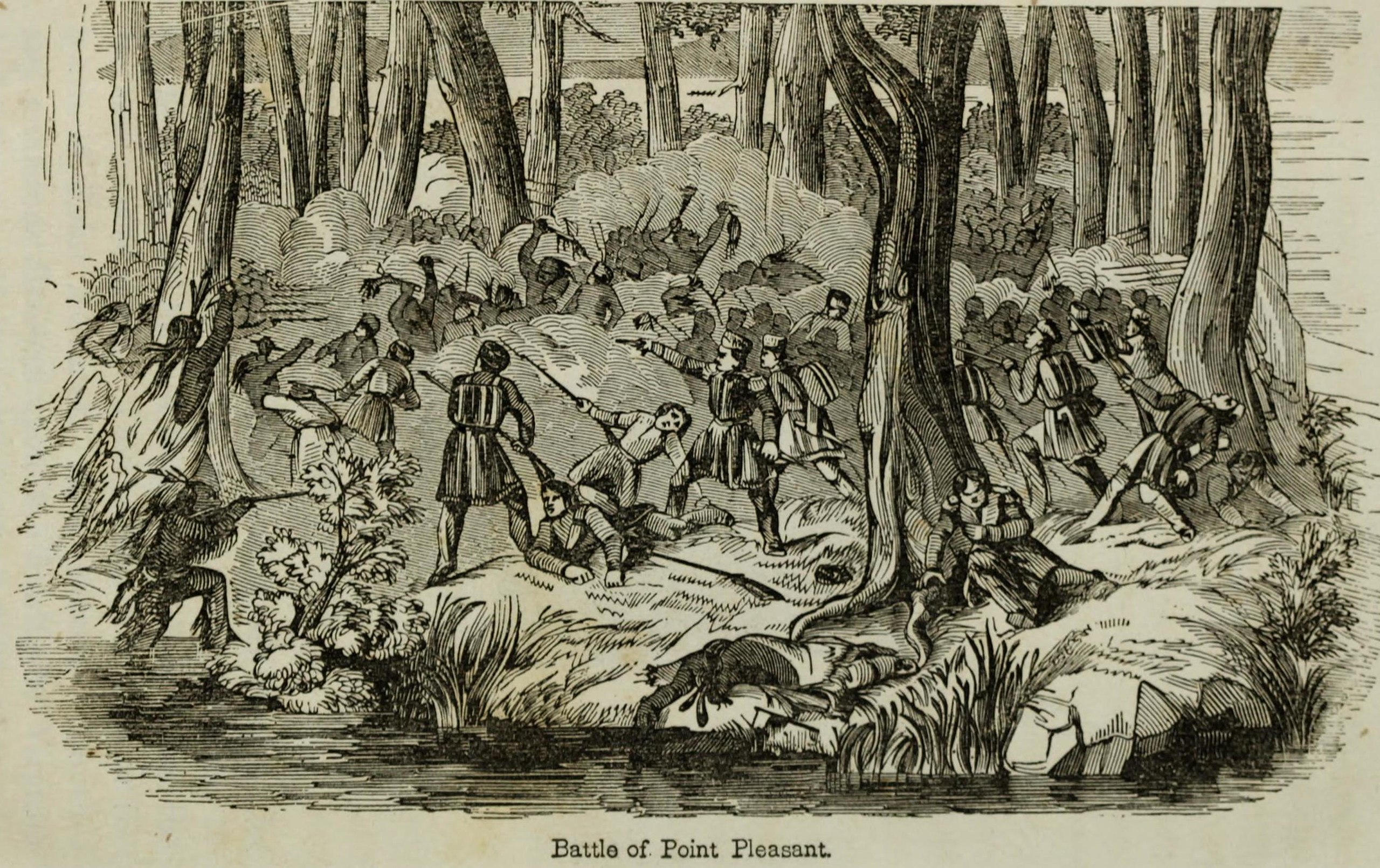 1854 Frost, John
The only major battle in the resistance known as Lord Dunmore's war, it was fought between the Virginia militia and Shawnee and Mingo warriors led by Hokoleskwa (Cornstalk). Hokoleskwa was previously involved in Pontiac's rebellion, which was a major factor in Lord Dunmore's war. At the conclusion of Pontiac's rebellion, the Proclamation Line was established (1763), creating 'Indian Country' and meant to keep settlers on the east side of the Appalachian's. Later, in 1768, at the Treaty of Fort Stanwix, Haudenosaunee leaders and Great Britain agreed to move the Proclamation Line to follow the Ohio River, opening much of what would become West Virginia and Kentucky to settlement. The Haudenosaunee leaders and the British hoped this would end border hostilities between the settlers who were encroaching into the area anyways and the Indigenous peoples who's land it was. However, other Native inhabitants of the area were not consulted nor did they agree with opening this area to settlement. Namely, the Shawnee, Lenape, Mingo, and Wyandot peoples were not signatories. This treaty led to Lord Dunmore's war which was a short war of resistance against the settlers and land speculators flooding the area south of the Ohio River. The war was fought primarily by Shawnee and Mingo peoples with the colonial forces working hard to prevent another Indigenous confederacy like that of Pontiac's. Although ultimately unsuccessful, it is another important part of the history of Indigenous resistance to unchecked settler colonization, and also laid the stage for the Northwest Confederacy of united Indigenous peoples who would fight the Americans in the Northwest Indian War.