Royal Proclamation of 1763
Oct. 7, 1763
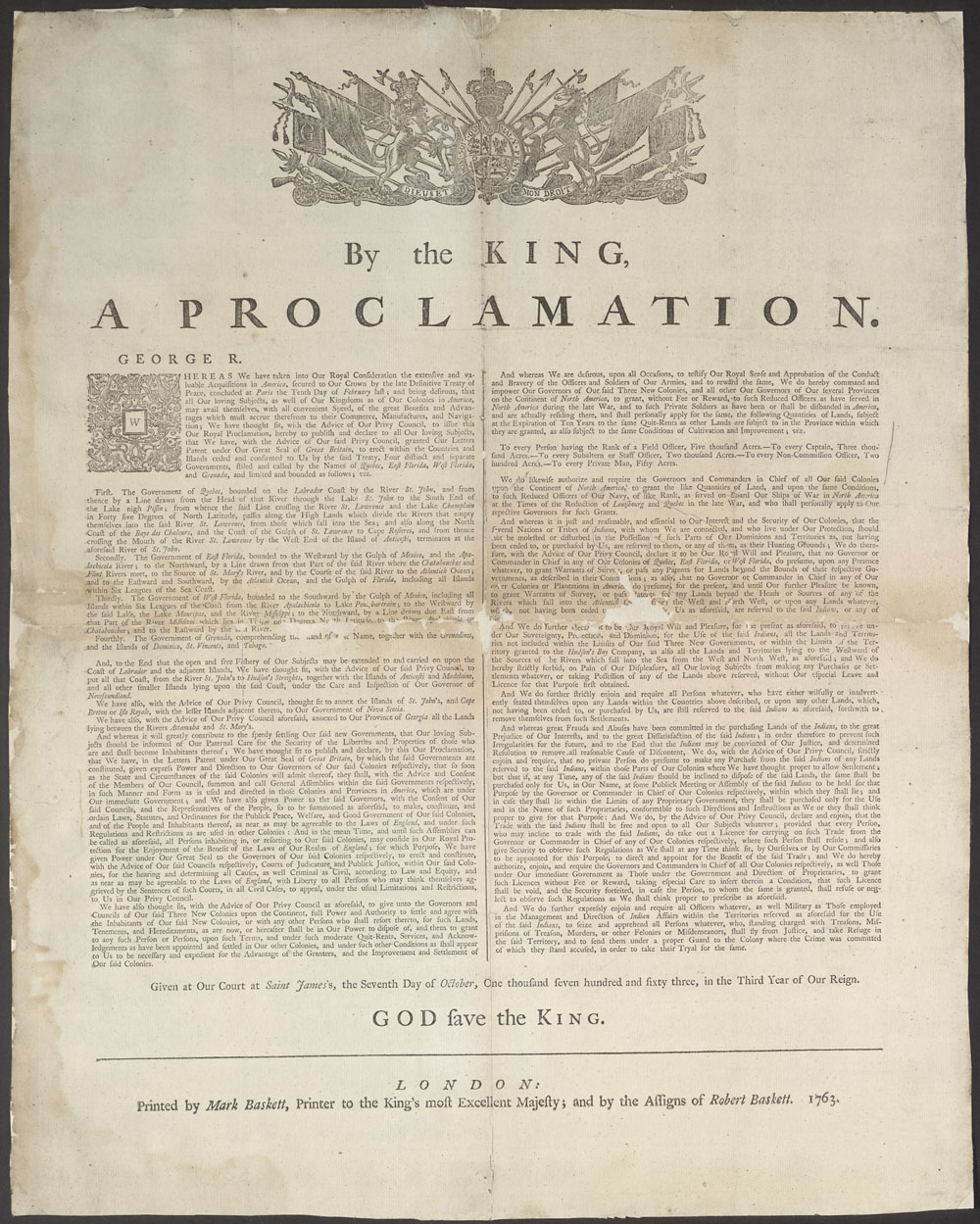 The Royal Proclamation of 1763. Library and Archives Canada, OCLC 1007612335
On this day in 1763 King George III of Great Britain issued a proclamation forbading new settlements west of a line roughly following the watershed boundary of the Appalachian mountains (Eastern Continental Divide). While the creation of a boundary had been discussed before the outbreak of Pontiac's rebellion, it was hastened once the uprising began. The proclamation was not an uncrossable border but a limit to westward expansion of settlers. It also forebade the private purchase of lands from Indigenous peoples, and made that the business exclusively of the crown. This has long standing impact on sovereignty struggles today, because it is the first legal recognition of aboriginal title, rights and freedoms. It established 'Indian Country' as territory over which the British Crown claimed sovereignty, but also was in possession of Indigenous peoples who occupied them. The proclamation caused friction between proto-American colonists, and the Crown, because the colonists wanted unrestricted westward expansion. Some colonists even had settlements already made past the line, some of which were abandoned due to Pontiac's Rebellion. For example, George Washington and his soldiers had been granted land westward of the border. The British Government was just coming out of the Seven Years War and intended the line not to cease westward expansion but to control it in a fashion which would not lead (immediately) to another costly war. The increased tensions caused between the colonists and the British Crown are why the Proclamation is also considered an event leading to the American Revolution.