"Walking Purchase" of Pennsylvania walk occurs
Sept. 19, 1737
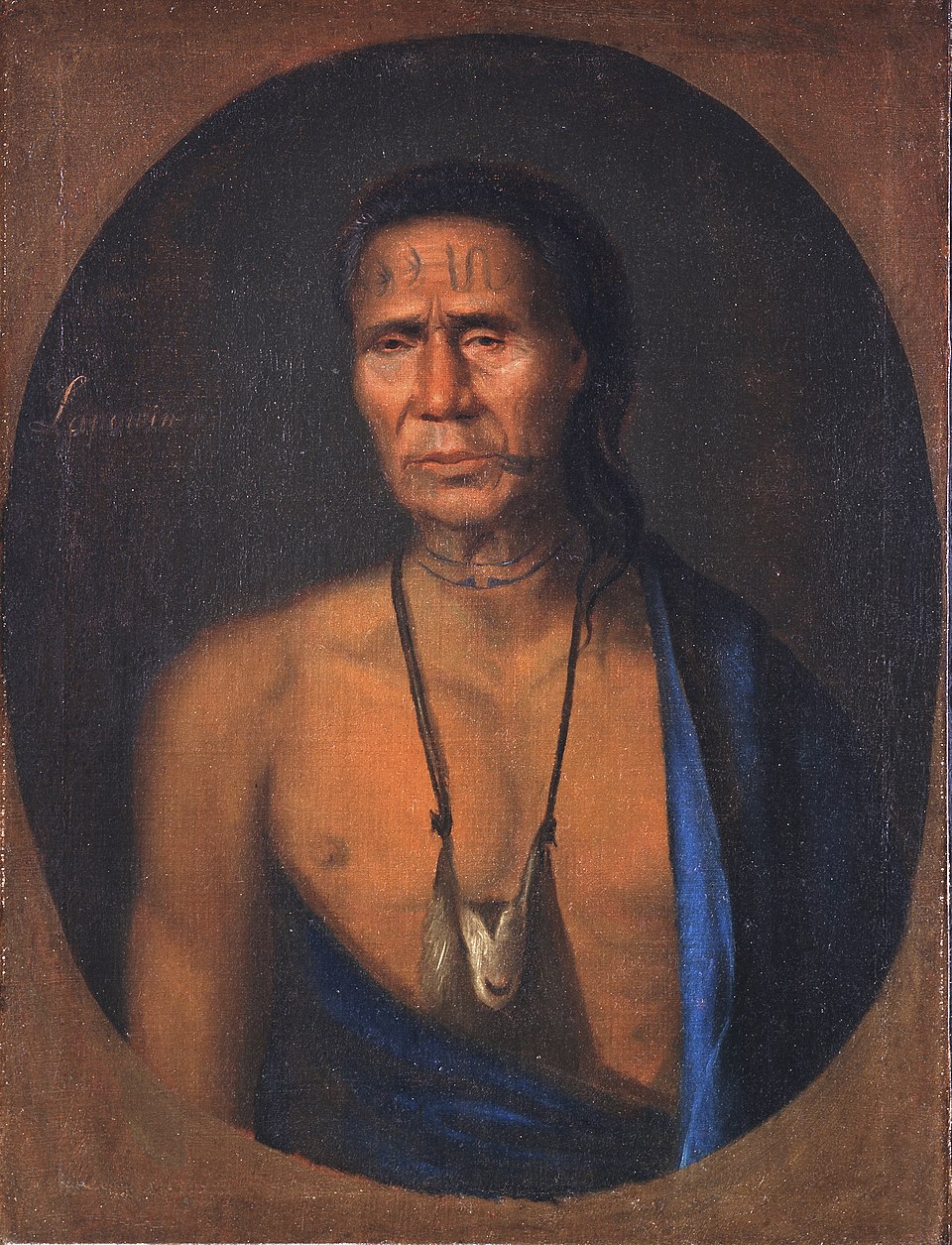 In 1735, Swedish painter Gustavus Hesselius, who lived in Philadelphia, painted this portrait of Lenape chief Lapowinsa, showing his facial painting. A signer of the infamous 1735 Walking Treaty, Lapowinsa and other Lenape chiefs would spend the next twenty years trying unsuccessfully to have the treaty voided.
Lenape leaders had earlier in the year signed a forged draft deed presented to them by John and Thomas Penn (sons of William Penn) after being shown a map which purposefully misrepresented the area to be ceded. The distance was described as about a day and half's walk, which was an understood measure of distance at the time to be approximately 40 miles. Amongst other forms of fraud involved in this land swindle from the Lenape, the Penn sons organized a 'walk' to be overseen by the Buck County Sheriff, where three fast hired runners were to complete a run of a day and a half along a prepared path. This enabled them to travel closer to 70 miles, resulting in a land swindle of about 1,200,932 acres. The Lenape leaders protested this fraud all the way to the present day, where they brought it to the highest court that would hear it, the United States Court of Appeals for the Third Circuit in 2006. The court did acknowledge that the treaty was accomplished by proven fraud, however it upheld that aboriginal title may validly be extinguished by fraud, and further held that the tribe had waived the issue of whether Penn was actually a sovereign purchaser. The Tribe had also claimed that Penn could not extinguish title, as only the King of England would have had that right at the time. The Walking Treaty removed all Lenape who were still living along the Delaware River and opened huge amounts of land for the Penn sons to sell to settlers and land speculators.