Stono Rebellion
Sept. 9, 1739
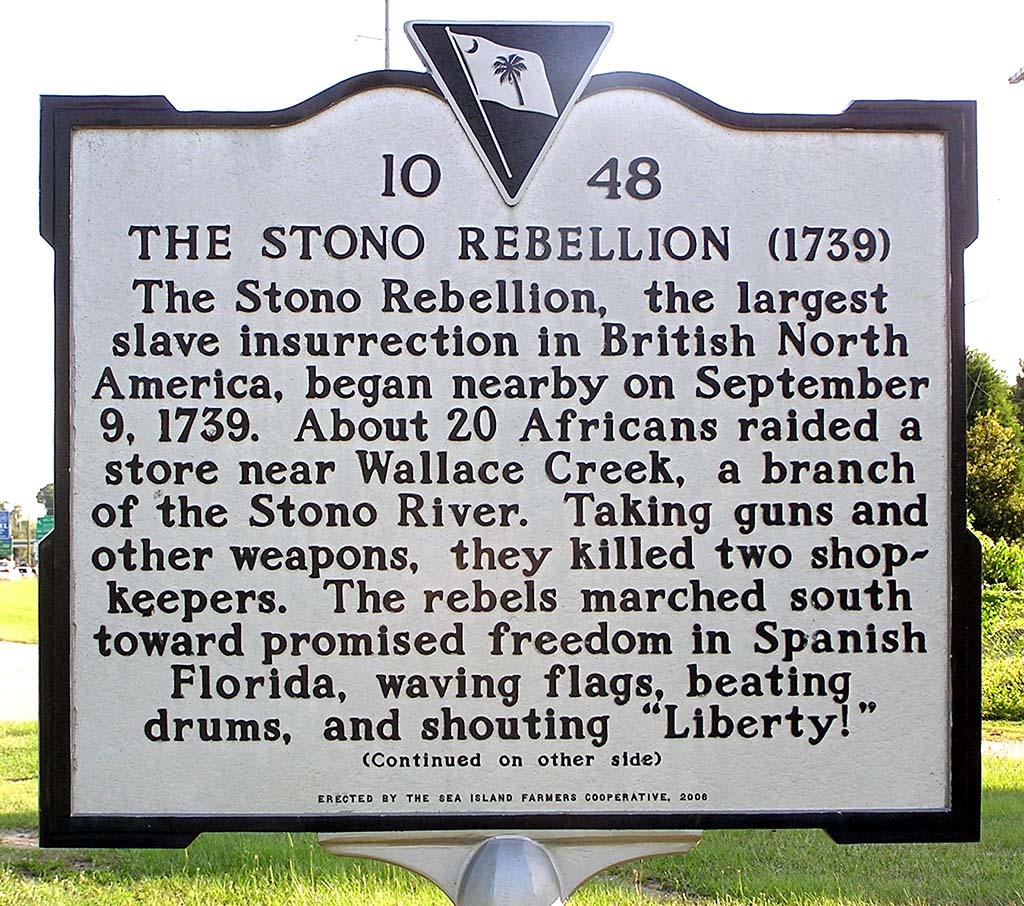 Stono Rebellion road marker
Jemmy sometimes referred to as Cato, led the largest slave revolt in the 'Southern Colonial Era'. Himself and ~20 other enslaved peoples somewhat recently arrived from the Kingdom of Kongo escaped and headed south towards Florida where they planned to live in Spanish controlled territory. On the day of the revolt they marched down the street near Charleston with a banner that read 'Liberty'. They raided the store and gathered provisions and weapons. Along they way they killed ~20 whites and were joined by ~60 more escapees. While they were ultimately caught, with most executed and the rest sold to the West Indies, it had a major effect on the area. It led to the passing of the Negro Act of 1740. This act tightened controls meant to stem uprisings- prohibited gatherings of enslaved peoples, learning to write, earning money, growing food, and required a ratio of 1:10 white to Black people on any plantation. It also made 'manumission' or 'enfranchisement' of enslaved people more difficult. However the revolt also preceeded and possibly inspired two other slave revolts in Georgia and South Carolina in the next two years. Planters in S Carolina set a ten year moratorium on slave importation, and when the decade ended they still imported slaves from areas other than the Congo. There is documentary evidence of more than 250 uprisings or attempted uprisings involving ten or more slaves in North America throughout the history of slavery.