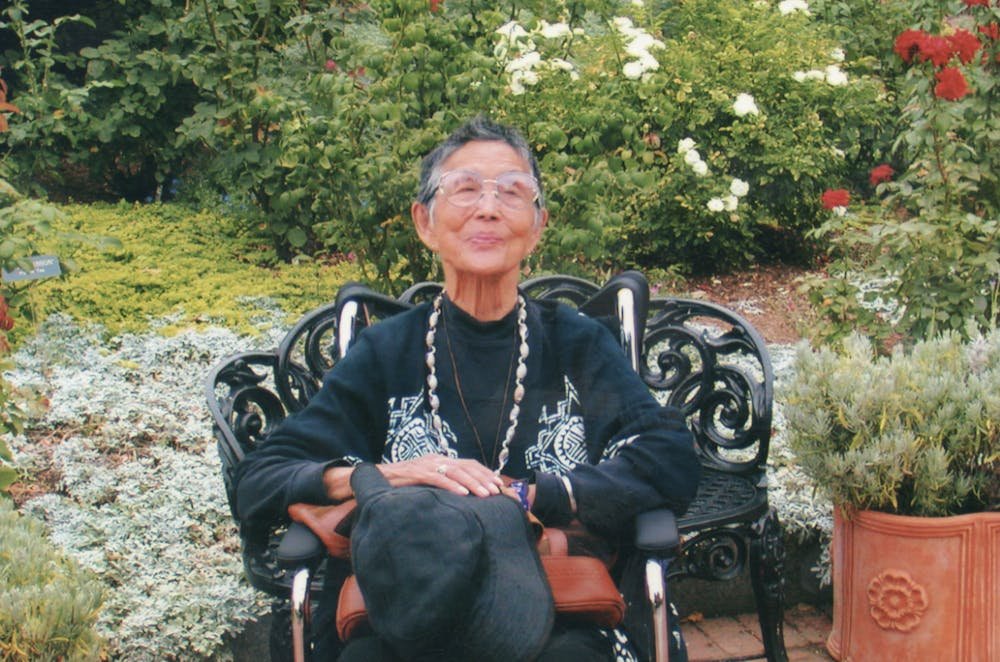
On this day in 1918, taqʷšəblu (Vi Hilbert) was born on the Skagit River in "Washington". An enrolled member of the sqaǰətabš or Upper Skagit people, she was instrumental in the preservation and revi…
On this day in 1918, taqʷšəblu (Vi Hilbert) was born on the Skagit River in "Washington". An enrolled member of the sqaǰətabš or Upper Skagit people, she was instrumental in the preservation and revitalization of the Lushootseed language, which was her first language. The University of Washington, which hosts her extensive archives, honors her work thus:
She became known as a teacher, storyteller, publisher, and public speaker. For over 40 years she built and maintained a research archive of cultural materials. Working with other scholars, she developed and published teaching materials and volumes of stories through Lushootseed Research, an organization which she founded. Her commitment to preserving Lushootseed language and literature is largely responsible for the renaissance of interest in Lushootseed culture and the growth of tribal language programs all over western Washington.
taqʷšəblu was a survivor of the boarding school at Tulalip, and later Chemawa Indian Boarding School near Salem, Oregon. She began working with linguist Thom Hess in 1967 on Lushootseed preservation and began teaching at UW in 1973. On the language work to which she dedicated her life: “That work was a gift. sx̌ʷitil sʔuy̓ay̓us,” taqʷšəblu said. “Work that the Creator bestowed on me. I was ordained to do this work. It was always there, waiting for me to do.” You can find much of her life's work including countless recordings of Lushootseed language as well as Vi herself speaking and teaching Lushootseed in her archives, Voices of the First Peoples https://guides.lib.uw.edu/vihilbert
To quote her again: "All of the time I have spent doing this research to date has been an act of deep respect to my elders and a donation to our Indian youth. It is a cherished legacy to the memory of our ancestors whose hearts would be gladdened to know that the culture of our people is being passed on to generations to come."