Adapted from Black Women Radical's biography:
Born on this day in 1895, Eslanda Goode Robeson was a journalist, anthropologist and political organizer who's work spanned the globe and included suppor…
Adapted from Black Women Radical's biography:
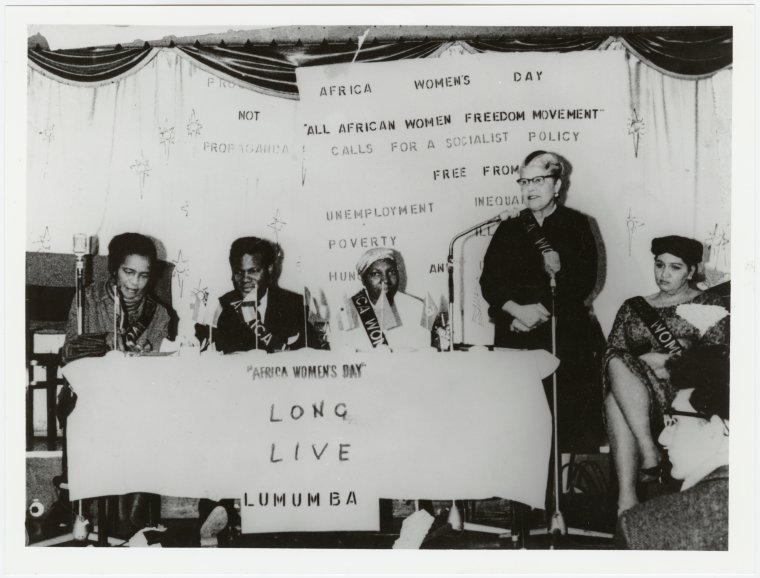
Born on this day in 1895, Eslanda Goode Robeson was a journalist, anthropologist and political organizer who's work spanned the globe and included support for anti-colonial struggles, civil rights, and internationalism. Black Women Radical's biography states "Robeson strongly believed that Black American solidarity with Third World movements could facilitate the creation of a new egalitarian world order." Robeson traveled extensively in Africa, as well as building community in Harlem, London, and France with diasporic Black people from around the world. She was a member of the West African Student Union (WASU), a leftist and anticolonial organization founded in London in 1925. In 1941, Robeson and other Black political figures formed the Council on African Affairs (CAA) in the United States. Her husband, Paul Robeson, was the organization’s chairman. The mission of the organization was to promote Pan-Africanist solidarity to support the movement of colonized people more broadly. Her internationalism continued when she became a journalist for the New World Review, which let her report on anti-colonial struggles, especially Kwame Nkrumah of Ghana and Sekou Touré of Guinea. In 1952, Robeson and 13 other leftist African American women formed the organization Sojourners for Truth and Justice, a Black feminist internationalist organization dedicated to dismantling Jim Crow, colonialism, and critiquing and mobilizing against U.S. Cold War foreign and domestic policy. For her work she was subpoenaed by U.S. senator Joseph McCarthy and she questioned the legitimacy of the trial and refused to answer the council’s questions, citing the Fifth and Fifteenth Amendment. As a result, both Eslanda and Paul had their passports revoked for five years. Despite the repression, she continued to support the American Black freedom struggle and independence movements in Africa until her death.